Understanding the Role of the Landlord Ombudsman in the PRS
The Landlord Ombudsman is a newly mandated redress scheme designed to handle complaints from tenants in the private rented sector (PRS). With the Renters (Reform) Bill progressing, all private landlords in England.
Whether operating directly or via an agent, will be legally required to join a Landlord Ombudsman scheme. The goal is to provide tenants with a streamlined, impartial process for resolving disputes and to raise standards across the PRS.
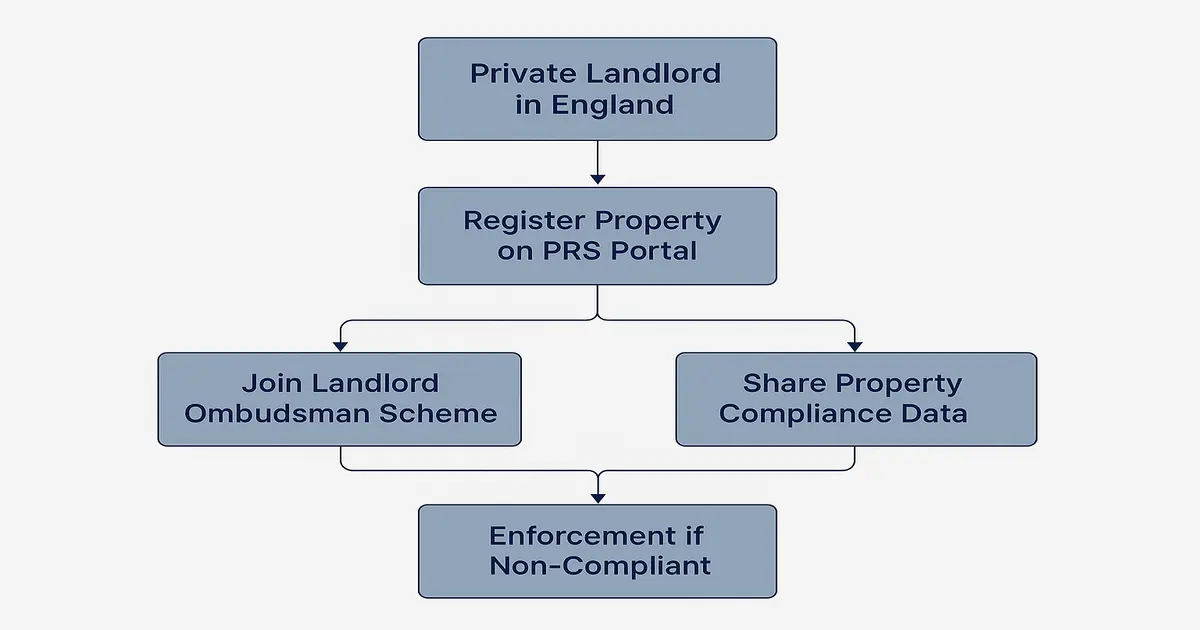
Unlike current voluntary schemes, membership will become compulsory. Failure to join the Ombudsman may result in enforcement action, including civil penalties and potential banning orders.
The Landlord Ombudsman will act independently of letting agents and property managers and offer a formal alternative to court proceedings for tenant complaints.
What Is the Private Rented Sector (PRS) Portal?
The Private Rented Sector (PRS) Portal is a centralized digital platform that will require every landlord in England to register their properties.
This PRS Portal will be managed by the central government and is intended to increase transparency, improve data collection, and support compliance monitoring for both tenants and enforcement bodies.
Landlords will be required to input:
- Full property address
- Tenancy type
- EPC rating
- Safety certifications (gas, electrical, etc.)
- Landlord contact details
This information will be publicly accessible to some degree, allowing tenants to verify whether their landlord is compliant. Registration on the PRS Portal is separate from schemes like the Deposit Protection Service or local licensing systems.
How the Landlord Ombudsman and PRS Portal Will Work Together
The Landlord Ombudsman and the PRS Portal form a dual compliance framework under the Renters (Reform) Bill. Registration on the PRS Portal will likely be a prerequisite for joining the Ombudsman scheme. Together, these systems are expected to:
- Strengthen tenant protections
- Enhance landlord accountability
- Reduce reliance on court-based dispute resolution
- Streamline enforcement for local authorities
The PRS Portal will also be the mechanism for tracking landlord compliance, complaints, and enforcement outcomes.
Legal Implications for Landlords in England
Under the Renters (Reform) Bill, failure to join the Landlord Ombudsman or register with the PRS Portal will be a breach of legal obligations. Local authorities will have the power to issue:
- Civil penalties up to £5,000 for initial offences
- Banning orders for repeat breaches
- Rent repayment orders in severe cases
Landlords may also face reputational damage, particularly if complaints escalate or become part of public records on the PRS Portal.
Dispute Resolution: What Tenants Can Raise Through the Ombudsman
Tenants will be able to raise a range of complaints, including:
- Unlawful retention of deposits
- Poor property maintenance
- Delays in repairs
- Unjust rent increases
- Harassment or unlawful entry by landlords
The Landlord Ombudsman will offer legally binding decisions, enforceable without the need for court proceedings. Remedies may include compensation, rent reductions, or mandated repairs.
Voluntary Schemes vs. Statutory Landlord Ombudsman
Currently, only letting agents are required to belong to redress schemes such as:
- The Property Ombudsman
- Property Redress Scheme
Landlords have operated largely outside this framework unless working through agents. The new Landlord Ombudsman scheme will eliminate this loophole, creating parity across the PRS.
Timeline and Preparation for Landlords
While an exact implementation date is subject to final legislative approval, landlords should begin preparations now by:
- Collecting accurate property and compliance documentation
- Understanding the obligations of redress scheme membership
- Planning for registration costs and time
- Reviewing dispute resolution procedures
Failure to act early may result in last-minute non-compliance and potential financial penalties.
Impact on Landlords Operating via Letting Agents
Even if a landlord uses a fully managed service from a letting agent, the landlord will still be responsible for:
- Registering their property on the PRS Portal
- Joining the Landlord Ombudsman independently
Letting agents remain subject to their redress requirements, but cannot fulfil these new obligations on the landlord’s behalf.
What Happens If Landlords Do Not Comply?
Non-compliance will trigger enforcement via:
- Local housing authority investigations
- PRS Portal flagging of unregistered properties
- Legal proceedings or fines
- Public reporting and blacklisting
Tenants will also be empowered to report landlords via the PRS Portal, and Ombudsman rulings may become part of a public compliance record.
Benefits of Compliance for Landlords
While the new system introduces regulatory burdens, compliant landlords will benefit from:
- Increased tenant trust and satisfaction
- Reduced legal risks
- Improved reputation via the PRS Portal
- Faster, cheaper resolution of disputes without court action
How Letting Agents Can Support Landlords
Letting agents can play a role in guiding landlords through:
- PRS Portal registration
- Ensuring all compliance documents are in place
- Helping respond to Ombudsman investigations
- Advising on redress scheme membership
However, legal responsibility remains with the landlord, not the agent.
Preparing for the Future of PRS Regulation in England
The introduction of the Landlord Ombudsman and the PRS Portal signals a transformation of landlord obligations. These changes reflect the government’s drive for transparency, tenant empowerment, and accountability in the private rented sector.
We encourage all landlords to prepare by auditing their portfolios, improving compliance records, and staying informed of Renters (Reform) Bill updates.
FAQs About the Landlord Ombudsman and PRS Portal
What is the Landlord Ombudsman?
A government-backed redress scheme that resolves tenant complaints about landlords in the PRS, offering binding decisions.
What is the PRS Portal?
A national digital register where landlords must upload property compliance data and tenancy details.
Do landlords need to register if they use a letting agent?
Yes. Even if managed by an agent, landlords must register and join the Ombudsman directly.
What happens if I don’t join the Landlord Ombudsman?
You could face civil penalties, enforcement action, or even banning orders for non-compliance.
When will this be mandatory?
Implementation is expected following the whole passage of the Renters (Reform) Bill. Landlords should prepare now.
Is this only for England?
Yes. The reforms currently apply only to the private rented sector in England.
Can tenants report landlords?
Yes. The PRS Portal will allow tenants and local authorities to view compliance records and report landlords.
Our top read blogs:
Free Legal Advice for Commercial Property Landlords in the UK
Why Landlords Are Increasingly Favouring Semi-Commercial Property Investments
The British Landlords Association is a national landlord association, one of the largest in the UK. The BLA is the only landlords’ association in the UK that represents and supports both commercial and residential landlords. Join us now for £89.95!