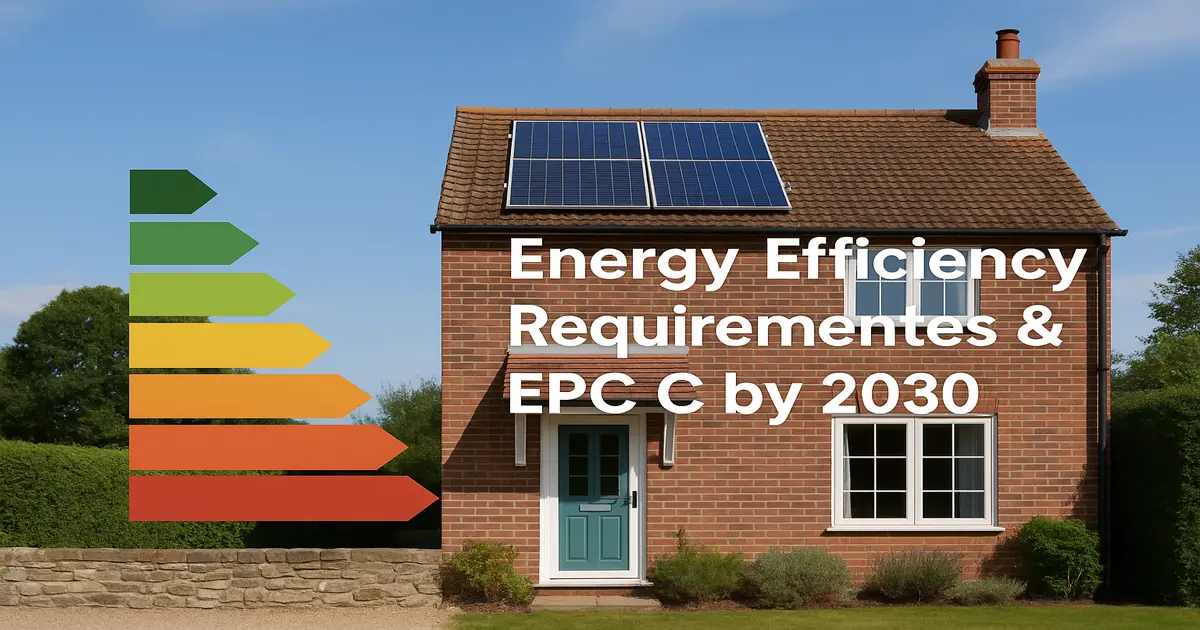
Energy Efficiency Requirements & EPC C by 2030: What Landlords in England Must Know
The UK government is tightening energy performance standards in rental properties. By 2030, all rental properties in England must meet a minimum Energy Performance Certificate (EPC) rating of C.
This move is part of a broader strategy to reduce carbon emissions and improve living standards. For landlords, this means significant changes ahead.
In this guide, we explore the impact of the Energy Efficiency Requirements & EPC C by 2030, estimated upgrade costs, lobbying efforts, and what landlords can do to prepare now.
What Is the EPC Rating and Why Is It Changing?
An Energy Performance Certificate (EPC) rates the energy efficiency of a property from A (most efficient) to G (least efficient). Currently, landlords are required to achieve at least an EPC rating of E to rent out properties legally.
However, under the proposed Energy Efficiency Requirements & EPC C by 2030, this minimum threshold will rise to C.
The aim of the policy is to:
- Reduce energy consumption and emissions
- Lower tenants’ heating bills
- Improve housing standards
- Support the UK’s net-zero carbon targets
This means that any rental property in England with an EPC rating below C will need energy efficiency improvements by 2030.
Estimated Costs to Comply with EPC C by 2030
Upgrading a property to meet Energy Efficiency Requirements & EPC C by 2030 will not come cheap. Government estimates place the cost at between £6,100 and £8,000 per property.
However, depending on the building’s age, insulation, and heating system, some landlords may face much higher costs.
Typical improvements include:
- Cavity wall insulation
- Loft insulation upgrades
- Double or triple glazing
- Installation of energy-efficient boilers or heat pumps
- Solar panels or smart thermostats
- Draught-proofing and LED lighting
Many landlords with older Victorian or Edwardian properties will find upgrades particularly expensive due to outdated construction methods.
Who Is Affected by the New EPC C Requirement?
The Energy Efficiency Requirements & EPC C by 2030 apply to:
- Private residential landlords
- Houses in multiple occupation (HMOs)
- Buy-to-let investors
- Social housing (subject to separate government targets)
- Letting agents managing rental stock on behalf of landlords
New tenancies and renewals are likely to be required to comply with EPC C by 2025, while existing tenancies will need to comply by 2030, unless the government introduces phased deadlines or delays.
The Current Legal Framework
Currently, the Minimum Energy Efficiency Standards (MEES) regulations state that rental properties must have at least an EPC E rating. Landlords who fail to comply face:
- Civil penalties of up to £5,000 per property
- Potential bans on letting substandard properties
- Reputational risk with tenants and letting agents
Once the Energy Efficiency Requirements & EPC C by 2030 are enshrined in law, we can expect much stricter enforcement.
Lobbying Efforts for Reform and Financial Support
Landlord associations and property professionals across England are actively lobbying the government to:
- Provide financial incentives or grants
- Allow longer transition periods
- Create exceptions for hard-to-improve properties
- Offer tax deductions or VAT relief on retrofit expenses
Many landlords argue that the current targets are unrealistic, especially given inflation, labour shortages, and high material costs.
Groups like the British Landlords Association (BLA) have urged the government to introduce phased deadlines, starting with newly let properties before applying the rules to all existing tenancies.
Are There Any Exemptions?
While the exact terms of the upcoming Energy Efficiency Requirements & EPC C by 2030 are still evolving, under the current MEES regulations, exemptions are allowed for:
- Cost-effectiveness: If improvements exceed the £3,500 cost cap (which may rise under new rules).
- All improvements made: If all reasonable enhancements have been made, but the EPC still falls short of C.
- Third-party consent: If improvements require permission from a tenant, freeholder, or planning authority and consent is refused, the project may proceed without it.
- Listed buildings: Where improvements would unacceptably alter the character of the building.
All exemptions must be registered on the PRS Exemptions Register and are valid for a limited period.
How Landlords Should Prepare Now
Even though 2030 may seem distant, landlords should act early. The closer we get to the Energy Efficiency Requirements & EPC C by 2030 deadline, the higher the competition will be for retrofit contractors, materials, and funding.
Here are practical steps to prepare:
- Review your current EPC certificate: Identify the existing rating and recommended improvements.
- Get a new EPC assessment if your certificate is outdated (over 10 years old).
- Prioritise low-cost, high-impact upgrades: Loft insulation and LED lighting are affordable and effective.
- Plan for significant improvements over time: Spread the financial impact over several years.
- Keep tenants informed: Communicate planned works early and minimise disruption.
By planning, landlords can avoid last-minute panic and rising retrofit costs.
Will There Be Government Support?
While specific grants for the Energy Efficiency Requirements & EPC C by 2030 have not yet been finalised, the government has previously run schemes such as:
- Green Homes Grant (now closed)
- Boiler Upgrade Scheme (BUS)
- ECO4 Scheme for low-income households
- Local authority funding for energy-saving projects
Many expect a new national initiative to be introduced ahead of 2025 to help landlords meet their obligations. In the meantime, it is worth exploring regional council grants or speaking with local retrofit professionals.
Risks of Non-Compliance
If a landlord fails to meet the Energy Efficiency Requirements & EPC C by 2030, they may face:
- Financial penalties (which may exceed £10,000 under new legislation)
- Rental voids if tenants refuse to stay in inefficient properties
- Legal action by tenants or authorities
- Mortgage refusals as lenders tighten sustainability criteria
In the long term, energy-inefficient homes will become unlettable, unsellable, or heavily discounted in value.
How Will This Impact the Rental Market?
The requirement for EPC C by 2030 will reshape the private rented sector in England. Likely effects include:
- Rent increases as landlords pass on upgrade costs
- Sale of non-compliant properties, reducing available rental stock
- Greater demand for EPC assessors and retrofit contractors
- Increased property values for compliant homes
- Changing tenant preferences toward energy-efficient housing
Landlords who invest early in energy efficiency improvements will enjoy stronger tenant demand and long-term asset protection.
Technology That Can Help Landlords
Innovative technology plays a critical role in achieving Energy Efficiency Requirements & EPC C by 2030. Consider these tools:
- Smart thermostats (e.g. Hive, Nest)
- Zoned heating systems
- Remote boiler monitoring
- Energy usage tracking apps
- Solar PV and battery storage
Investing in technology now not only improves EPC ratings but also helps reduce long-term energy bills.
Final Thoughts on Energy Efficiency Requirements & EPC C by 2030
The Energy Efficiency Requirements & EPC C by 2030 represent a seismic shift in England’s rental landscape. For landlords, it’s no longer a matter of if but when you must act. While the costs may seem daunting, the long-term benefits include:
- Higher rental income
- Increased property value
- Legal compliance
- Satisfied tenants
Planning, lobbying for support, and starting improvements now will ensure landlords are ready to meet the challenge and thrive in a greener future.
FAQs
What happens if I can’t afford to make the EPC upgrades?
You may be eligible for exemptions or government grants. Keep an eye on future announcements and register valid exemptions on the PRS Exemptions Register.
Will the EPC C deadline be 2030?
The government is committed to this timeline, but landlords are lobbying for phased implementation. Final dates may vary depending on policy revisions.
Can I still rent my property if it doesn’t meet EPC C after 2030?
No. Unless you have a valid exemption, you will be prohibited from legally renting out the property.
How do I find out my property’s current EPC rating?
Search the EPC Register for your address or order a new EPC assessment from an accredited assessor.
Are there tax benefits for energy upgrades?
Currently, capital allowances may apply to some improvements. Additional tax relief is being considered as part of wider landlord support.
Our top read blogs:
Free Legal Advice for Commercial Property Landlords in the UK
Why Landlords Are Increasingly Favouring Semi-Commercial Property Investments
The British Landlords Association is a national landlord association, one of the largest in the UK. The BLA is the only landlords’ association in the UK that represents and supports both commercial and residential landlords. Join us now for £89.95!