How are Protected Lease Renewals Started and Opposed?
Protected lease renewals under the Landlord and Tenant Act 1954 (“the 1954 Act”) are a cornerstone of commercial property law in England and Wales. Business tenants enjoy statutory security of tenure unless this has been formally excluded.
Understanding how renewals are triggered and how they can be opposed is essential for both landlords and tenants. Timing, statutory procedure, and service requirements are critical. Any errors can invalidate the process and cause costly delays.
Understanding Security of Tenure
Security of tenure means that a business tenant has the legal right to remain in occupation after the contractual expiry of the lease. Unless the lease has been validly contracted out of the 1954 Act, the tenant may not be evicted simply because the term ends.
The lease continues on the same terms until it is either renewed, terminated, or opposed by the Act.
This statutory protection gives tenants stability for their businesses. At the same time, landlords are not left without remedies, as the Act provides clear grounds on which a landlord may oppose renewal. The balance is designed to protect commercial certainty for both sides.
Starting the Renewal Process
A renewal can be initiated in two ways: either by the landlord under section 25, or by the tenant under section 26 of the Act.
Landlord’s Section 25 Notice
A landlord can bring matters to a head by serving a section 25 notice. The notice must be served not less than six months and not more than twelve months before the date specified in the notice for termination of the current lease. The notice may either:
- Propose terms for a new lease (a “friendly” section 25 notice), or
- State that the landlord opposes renewal, specifying which statutory grounds apply.
The landlord cannot later change their mind. If opposition is stated, the landlord must prove the chosen grounds in court if challenged.
Tenant’s Section 26 Request
If the landlord has not already served a section 25 notice, the tenant may serve a section 26 request for a new tenancy. This request must also give not less than six months and not more than twelve months’ notice before the proposed commencement date of the new lease.
Once validly served, the landlord must respond. If the landlord wishes to oppose the grant of a new lease, they must serve a counter-notice within two months, stating the statutory grounds of opposition.
Failure to serve a counter-notice will entitle the tenant to a new lease, with only the terms subject to negotiation or determination by the court.
Importance of Timing and Service
Strict statutory rules govern timing and service. A notice served too early or too late is invalid. Service must comply with the lease terms or statutory requirements. Any procedural slip may give the other party an advantage. For example, if a landlord misses the deadline for a counter-notice to a section 26 request, the tenant will automatically be entitled to renewal.
Professional advice is therefore essential when drafting and serving notices. Landlords and tenants alike should diarise critical dates well in advance of the lease expiry.
Grounds on Which Landlords Can Oppose Renewal
The 1954 Act sets out an exhaustive list of statutory grounds on which a landlord may oppose renewal. These are contained in section 30(1) and fall into two broad categories: “fault” grounds based on the tenant’s conduct, and “management” grounds based on the landlord’s plans.
Fault Grounds
- Breach of repair obligation (Ground A): Where the tenant has failed to maintain the premises in repair.
- Persistent delay in rent (Ground B): Where the tenant has regularly paid rent late.
- Other substantial breaches (Ground C): Covers breaches of other obligations in the lease.
- Suitable alternative accommodation (Ground D): If the landlord can provide suitable alternative premises for the tenant.
Management Grounds
- Own occupation (Ground E): Where the landlord intends to occupy the premises for their own business or residence.
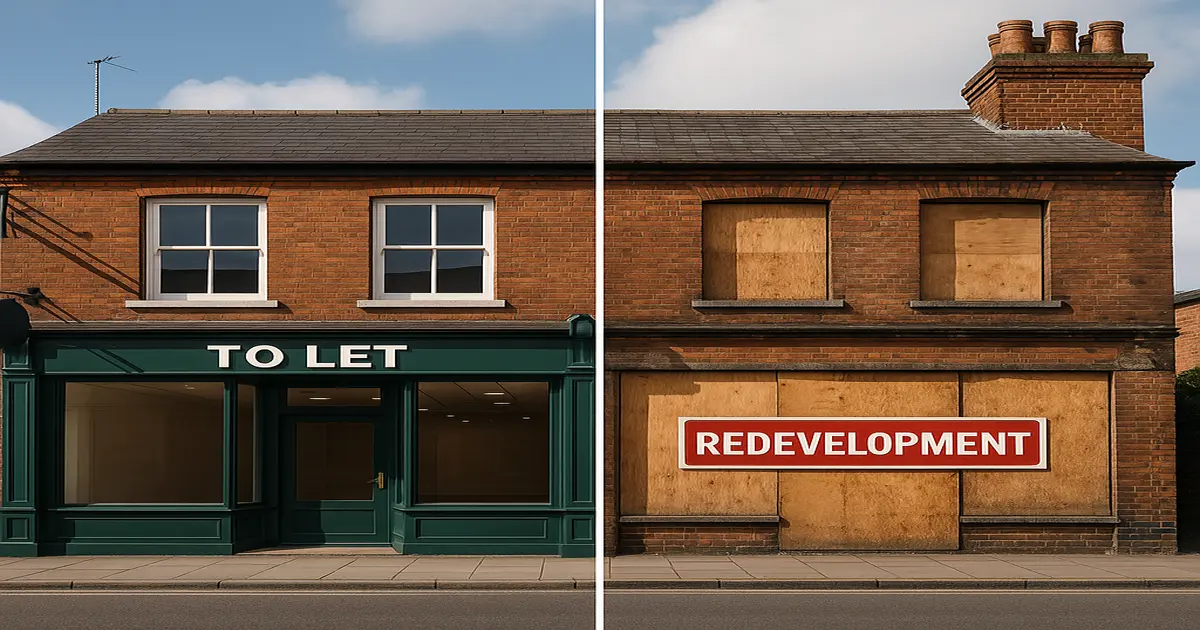
- Redevelopment (Ground F): Where the landlord intends to demolish or reconstruct the premises and cannot reasonably do so with the tenant in occupation.
- Superior landlord requirement (Ground G): Where a superior landlord requires possession for redevelopment or other purposes.
These grounds are strictly interpreted. The landlord must provide evidence of genuine intention and ability to carry out the proposed occupation or redevelopment. Mere aspiration is insufficient.
Court’s Approach to Opposed Renewals
If the landlord opposes renewal and the tenant contests this, the dispute proceeds to court. The court examines whether the statutory ground has been made out.
For redevelopment or own occupation, the landlord must show a settled and workable plan, together with financial resources to carry it out. Courts scrutinise the landlord’s intentions closely to prevent abuse of the system.
Where fault grounds are relied upon, evidence of persistent breaches is required. A single late rent payment will not suffice. However, repeated arrears over time can justify opposition.
Compensation for Tenants
If a landlord successfully opposes renewal on specific management grounds (not fault grounds), the tenant is entitled to statutory compensation. The compensation is calculated by reference to the rateable value of the premises and increases if the tenant has been in occupation for more than 14 years.
This provides a measure of fairness where tenants lose valuable premises through no fault of their own.
Strategic Considerations for Landlords
Landlords should plan well in advance of lease expiry. If redevelopment or own occupation is contemplated, evidence must be gathered and financing secured before serving a notice. Poor preparation can lead to costly litigation failure.
When relying on tenant default, landlords should maintain detailed records of arrears or breaches. Prompt enforcement of covenants during the lease can strengthen later opposition to renewal.
It is also wise to consider whether a “friendly” section 25 notice proposing renewal may be more commercially beneficial than contested proceedings.
Strategic Considerations for Tenants
Tenants should be alert to the expiry date of their lease and consider whether to initiate renewal under section 26. Failure to act may leave them vulnerable to a landlord’s notice.
When served with an opposing notice, tenants should immediately seek legal advice. In many cases, opposition can be challenged successfully if the landlord’s evidence is weak. Tenants should also consider whether statutory compensation would adequately offset the loss of the premises.
Proactive negotiation often secures better terms than contested litigation.
Common Pitfalls
- Late service: Missing the statutory notice window is fatal.
- Defective drafting: Notices must contain the prescribed wording. Errors may invalidate them.
- Failure to respond: A landlord who fails to serve a counter-notice to a section 26 request within two months loses the right to oppose.
- Weak evidence: Courts demand clear proof of intention for redevelopment or occupation grounds.
Avoiding these pitfalls requires careful legal advice and strict compliance with statutory procedure.
Practical Example
Suppose a landlord owns a retail unit let to a tenant on a 10-year lease protected under the 1954 Act. The landlord wishes to redevelop the building into flats.
Six months before the lease end, the landlord serves a section 25 notice opposing renewal on redevelopment grounds.
The tenant challenges this in court. The landlord must produce detailed redevelopment plans, planning permission, and evidence of funding. If the landlord succeeds, the tenant must vacate but will be entitled to compensation.
If the landlord cannot prove intention or resources, the tenant will be granted a new lease, usually for a similar term.
FAQs
Can a landlord refuse to renew a protected lease for any reason?
No. The landlord can only refuse renewal on the statutory grounds set out in the 1954 Act.
What happens if the landlord does not respond to a section 26 request?
If no counter-notice is served within two months, the tenant is automatically entitled to a new lease.
Is the tenant always entitled to compensation if renewal is refused?
Only if renewal is refused on the landlord’s management grounds, such as redevelopment or own occupation, no compensation is payable if the tenant is at fault.
Can the parties agree on terms without going to court?
Yes. In most cases, parties negotiate and agree on lease terms without litigation. A court is only necessary if renewal is opposed or the terms cannot be agreed upon.
What if the lease was contracted out of the 1954 Act?
If the lease was validly contracted out, the tenant has no right to renewal at all once the lease ends.
Conclusion
Protected lease renewals under the 1954 Act safeguard business tenants while preserving landlords’ rights to recover possession on defined grounds. Renewals are triggered by a landlord’s section 25 notice or a tenant’s section 26 request.
Opposition is only possible on specific statutory grounds, such as redevelopment, own occupation, or serious tenant breaches. Timing and procedural accuracy are critical, and courts scrutinize landlords’ intentions carefully.
Both landlords and tenants should plan well in advance, seek expert legal advice, and negotiate wherever possible to avoid costly disputes. A clear understanding of how protected lease renewals are started and opposed ensures that both sides can protect their interests effectively.
Our top read blogs:
Free Legal Advice for Commercial Property Landlords in the UK
Why Landlords Are Increasingly Favouring Semi-Commercial Property Investments
The British Landlords Association is a national landlord association, one of the largest in the UK. The BLA is the only landlords’ association in the UK that represents and supports both commercial and residential landlords. Join us now for £89.95!