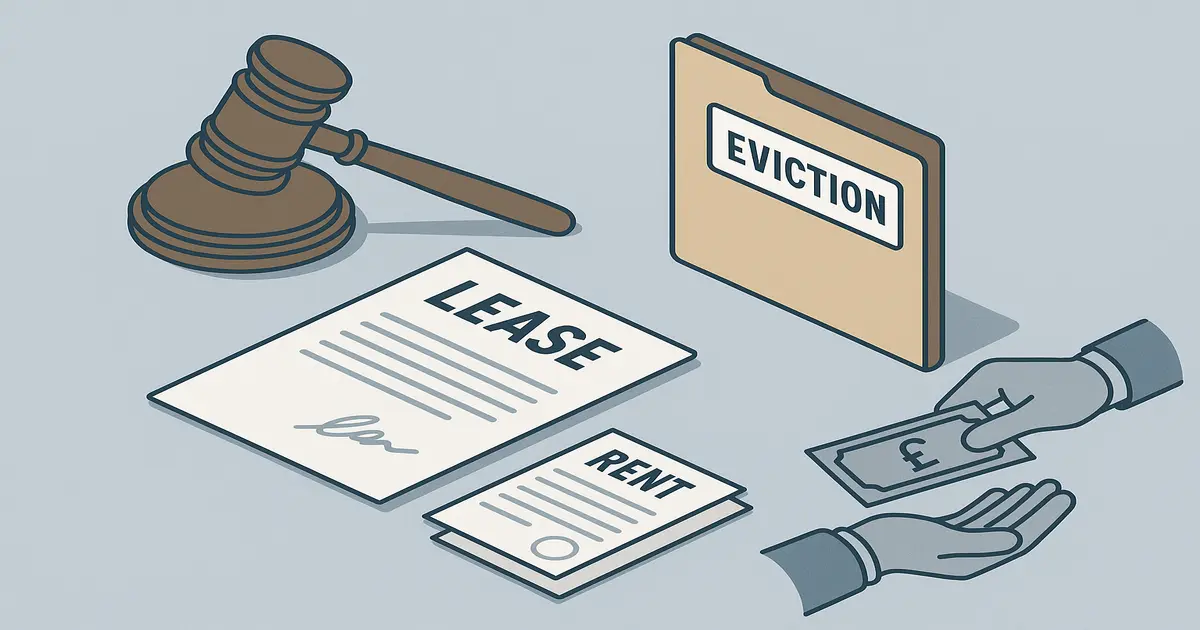
Important Update – Section 21 Abolished
Please note that under the Renters’ Rights Act 2025, Section 21 ‘no-fault’ eviction notices have been abolished. Section 8 notice Form 3A has been amended. This means landlords in England can no longer rely on Section 21 to regain possession of a property.
All possession claims must now be made using the statutory grounds under Housing Act 1988 (as amended), such as rent arrears, breach of tenancy, or other specified grounds.
Any guidance in this article relating to Section 21 reflects the legal position prior to these changes and is now provided for historical or contextual understanding only. Landlords should ensure they are following the updated legal framework before taking any action.
What Are My Rights if the Tenant Defaults on Rent or Breaches the Lease?
When a tenant defaults on rent or breaches other terms of a lease agreement, it can place a landlord in a financially precarious position.
Landlords in England and Wales have clear legal rights and remedies; however, it is crucial to understand the lawful process for recovering rent, terminating the lease, and regaining possession of the property.
Since the COVID-19 pandemic, legislative reforms have introduced additional complexities, particularly regarding eviction procedures and notice periods.
This article explains your rights as a landlord, how to lawfully act when a tenant defaults, and what you must consider in light of current legal frameworks.
Understanding a Breach of Lease or Rent Default
A tenant is considered to be in breach of the lease when they fail to fulfil their contractual obligations. This may include:
- Failing to pay rent on time or in full
- Causing damage to the property
- Subletting without permission
- Conducting illegal activity on the premises
- Failing to vacate after the lease expires
The most common breach landlords face is non-payment of rent. The seriousness of the breach will determine the remedy available to the landlord, and landlords must follow strict legal procedures before taking any enforcement action.
Initial Steps Before Legal Action
Before initiating any legal proceedings, landlords should first:
- Review the lease agreement: Confirm the precise terms, including rent due dates, forfeiture clauses, and any notice provisions.
- Communicate with the tenant: Attempt to resolve the matter amicably through dialogue or a written demand for payment.
- Serve a rent demand: Issue a formal demand outlining arrears and the consequences of non-payment.
Documenting all communication and payment history is crucial if the matter escalates to court.
What Are My Rights to Recover Rent?
Landlords have a right to recover unpaid rent through lawful means. Options include:
Negotiated repayment plan:
In some situations, particularly post-pandemic, tenants may request payment holidays or staggered repayments. Landlords can voluntarily accept a schedule, but it is essential to document the agreement in writing to ensure its validity and enforceability.
Court claim for rent arrears:
If the tenant fails to pay rent and informal resolutions are unsuccessful, a landlord can file a money claim in the county court. If successful, the court will issue a County Court Judgment (CCJ) against the tenant.
This can negatively impact their credit rating and enable the landlord to enforce the judgment through bailiffs or deductions from their wages.
Commercial Rent Arrears Recovery (CRAR):
For commercial premises, landlords may use CRAR to seize a tenant’s goods without the need for court proceedings, provided strict conditions are met.
CRAR can only be used if the premises are used solely for commercial purposes and a minimum of seven days’ rent is overdue. Notice must be served, and enforcement can only be conducted by certified enforcement agents.
Residential landlords cannot use CRAR. They must rely on court processes to recover rent or evict.
Forfeiture of the Lease
Forfeiture is the landlord’s legal right to terminate the lease prematurely when the tenant breaches a lease condition. This right must be explicitly reserved in the lease agreement.
Commercial leases:
Landlords can forfeit a commercial lease either through peaceful re-entry or by pursuing court proceedings. Peaceable re-entry means the landlord can physically re-enter the premises and change the locks, provided there is no residential element and no conflict or violence occurs.
Residential leases:
For residential properties, forfeiture is only possible in limited cases (e.g., long leasehold flats with ground rent arrears). Possession typically requires a court order under the Housing Act 1988 using Section 8 or Section 21 notices.
Rent arrears and forfeiture:
If the forfeiture is based on non-payment of rent, the lease will often provide a grace period, such as 14 or 21 days, during which the tenant can remedy the breach. Accepting rent after the breach may waive the right to forfeit.
Landlords should seek legal advice before forfeiting, as improper action can result in claims for unlawful eviction.
Eviction and Possession Proceedings
Eviction is a legal process and must not be conducted informally by locking out tenants or removing belongings. This applies to both residential and commercial properties.
Residential property eviction: The two main routes to evict a tenant are:
- Section 8 notice: Used when the tenant is in breach of the lease, particularly for rent arrears. It requires specifying which grounds are relied upon (e.g., Ground 8 for two months of arrears).
- Section 21 notice: Used for ‘no-fault’ evictions but only applies to assured shorthold tenancies. As of 2025, the government has proposed abolishing Section 21; however, the reforms are not yet in effect.
After serving a valid notice, landlords must apply to the court for a possession order if the tenant fails to vacate the premises within the specified timeframe. If the court grants possession and the tenant still fails to vacate, enforcement by court bailiffs or High Court enforcement officers is required.
Commercial property eviction: For commercial leases, landlords may forfeit the property via re-entry or court-ordered possession proceedings. Since the pandemic, restrictions were introduced to prevent eviction for rent arrears, but these were lifted in 2022.
Landlords must still comply with due process, including any lease notice requirements and potential relief from forfeiture rights granted to tenants by the court.
Impact of Post-COVID-19 Reforms on Landlord Rights
During the COVID-19 pandemic, the UK government enacted emergency protections to prevent mass evictions and support tenants. Key temporary measures included:
- Bans on residential and commercial evictions
- Extended notice periods (up to 6 months)
- Restrictions on CRAR and lease forfeiture
Most of these measures have since expired. However, courts remain sensitive to hardship issues, and landlords should be prepared to demonstrate reasonableness in their approach to these situations.
Rent arbitration scheme: For commercial landlords, the government introduced a binding arbitration process for certain pandemic rent arrears (March 2020 to July 2021). These provisions are no longer active but may still apply to unresolved disputes from the covered period.
Landlords must also remain vigilant to future legislative changes, particularly under the Renters’ Reform Bill, which aims to reform the private rented sector. This includes proposals to abolish Section 21 and introduce a single system of periodic tenancies.
Tenant’s Right to Relief from Forfeiture
Tenants have a statutory right to apply for relief from forfeiture. If granted, the lease will continue as if the forfeiture had never occurred. Courts are generally inclined to grant relief, especially when the tenant remedies the breach or pays arrears promptly.
This is particularly relevant when landlords act prematurely or fail to follow procedures. Seeking early legal advice and serving notices correctly is crucial.
Serving Notices Properly
To exercise rights like eviction or forfeiture, landlords must serve valid notices. These must comply with statutory requirements and any lease-specific terms and conditions.
- Notices must be addressed correctly and delivered in the method agreed in the lease.
- In some cases, landlords must serve a Section 146 notice before forfeiture (excluding non-payment of rent).
- Errors in service or content may render the notice invalid, resulting in delays and additional legal costs.
It is recommended to use a solicitor or legal adviser to draft and serve notices.
Mitigating Loss and Minimising Risk
When faced with a tenant default, landlords should consider strategies to minimise losses and avoid litigation:
- Act quickly: The more protracted arrears accumulate, the harder they are to recover.
- Maintain clear records: Keep accurate accounts of rent due, communications, and payment history.
- Negotiate professionally: Consider settlement plans, temporary rent reductions, or early lease termination.
- Secure guarantees: If a guarantor is named in the lease, pursue them for arrears or damages.
- Protect the deposit: Ensure that any tenancy deposit is correctly protected and deductions are justifiable.
Insurance products, such as rent guarantee insurance, can also mitigate losses in future tenancies.
Pursuing Damages Beyond Rent
Where a breach causes damage beyond arrears, landlords may sue for damages. This could include:
- Loss of profit due to early termination
- Reletting costs
- Property damage or dilapidations
In commercial settings, tenants may also be liable for rent until a replacement tenant is found, unless the landlord accepts a lease surrender or relets the premises.
Residential landlords, by contrast, must adhere to the tenant fee ban and deposit cap regulations when claiming losses.
Avoiding Unlawful Eviction
Landlords must not take the law into their own hands. Unlawful eviction is a criminal offence and can result in:
- Fines and imprisonment
- Compensation claims by tenants
- Being barred from serving future eviction notices
This applies even if the tenant has stopped paying rent or violated other terms of the lease.
Future-Proofing Your Lease Agreements
To reduce disputes, landlords should:
- Draft robust lease agreements with clear forfeiture, rent payment, and repair clauses
- Include detailed provisions for notices, default remedies, and guarantees
- Review and update leases regularly to reflect legal changes
Having well-drafted terms in place will strengthen a landlord’s position when enforcing their rights.
Conclusion: Know and Enforce Your Rights Properly
If the tenant defaults on rent or breaches the lease, landlords have legal avenues for redress. These include recovering rent, forfeiting the lease, and lawfully evicting the tenant.
However, the process must be handled meticulously, and this is especially true under current law, particularly in a post-pandemic climate where tenant protections have been strengthened.
Understanding your rights, following due process, and seeking professional advice where needed will help you protect your property investment without falling foul of the law.
FAQs
What is the quickest way to evict a non-paying tenant?
The fastest method is usually a Section 8 notice using Ground 8 (for serious rent arrears), followed by court action. If served correctly and arrears exceed the threshold, the court must grant possession to the creditor.
Can I change the locks if the tenant stops paying rent?
No. Locking out a tenant without a court order is unlawful and can lead to criminal and civil penalties.
Do I have to go to court to recover unpaid rent?
Yes, unless the tenant voluntarily pays. You can file a money claim online and enforce it with a County Court Judgment if successful.
Can I use a guarantor to recover rent?
Yes, if the lease includes a guarantor, you can demand rent and losses from them directly if the tenant defaults.
Are the COVID-19 eviction bans still in place?
No, most emergency measures have ended. However, courts may still consider pandemic-related hardship, especially in cases with historic arrears.
Useful External Links
GOV.UK – Understanding the Possession Action Process
www.gov.uk/government/publications/understanding-the-possession-action-process-guidance-for-landlords-and-tenants
GOV.UK – Rent Arrears Guide
www.gov.uk/private-renting/rent-arrears
GOV.UK – COVID-19 and Renting Guidance
www.gov.uk/government/publications/covid-19-and-renting-guidance-for-landlords-tenants-and-local-authorities
The British Landlords Association is a national landlord association for UK landlords, one of the largest landlord organisations in the UK. The BLA is the only commercial landlords’ association in the UK. Join us now for £89.95!
Our top-read blogs:
Is Commercial Property a Good Investment in England & Wales?
Commercial Property Rent Review Protocol
Investing in Commercial Property vs Residential Property: The Advantages and Disadvantages