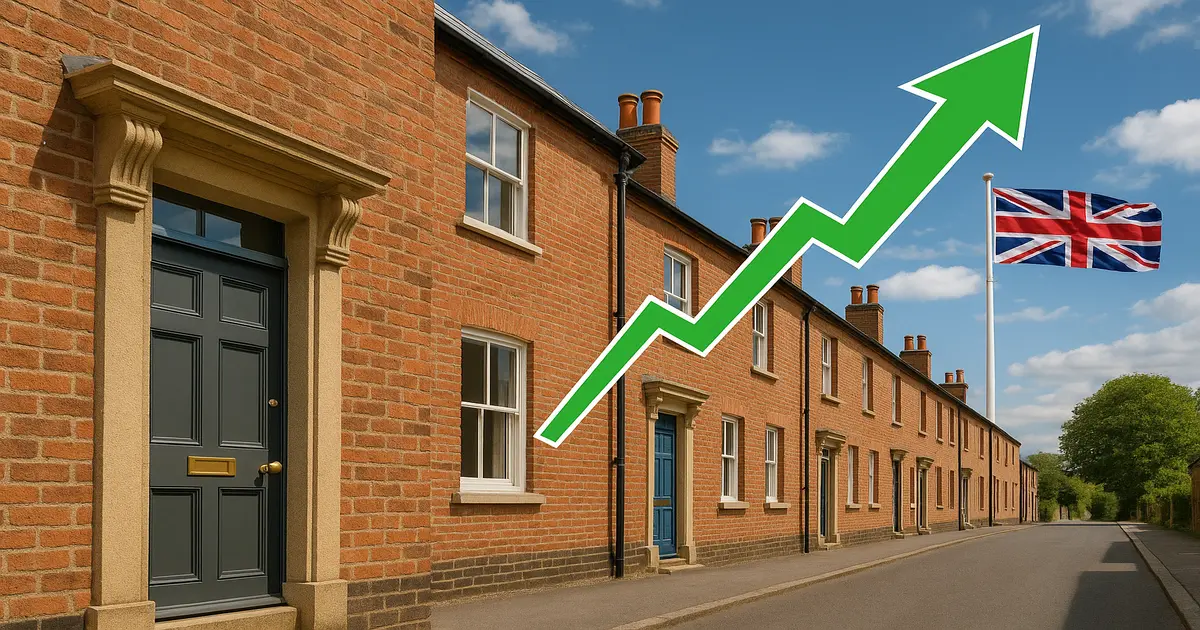
Will Property Prices Go Up in England in 2026
One of the most pressing questions among homeowners, landlords, and investors today is whether property prices will go up in England in 2026. Following several years of uncertainty caused by high interest rates, inflation, and political instability, confidence is slowly returning to the housing market.
The consensus among prominent property analysts is that England’s housing market will experience moderate but sustained growth in 2026, supported by lower borrowing costs, increased buyer demand, and a stabilising economy.
Economic Outlook and Interest Rate Shifts
The foundation of any property market recovery lies in economic stability. As inflation continues to cool throughout 2025, the Bank of England is expected to start reducing its base rate.
A gradual series of rate cuts will bring mortgage rates down, improving affordability and encouraging both first-time buyers and investors to re-enter the market.
For the past few years, affordability challenges have constrained demand. However, as wage growth begins to outpace inflation, disposable income is improving.
Financial analysts forecast that by mid-2026, the average two-year fixed mortgage rate could fall below 4%. This improvement will directly impact buying power, making it far more achievable for many households to purchase property.
Given these trends, it can be confidently answered whether property prices will go up in England in 2026. The economic environment points to recovery and measured growth across most regions.
Regional Market Differences
England’s housing market is intensely regional, meaning growth will not be uniform across the country. The South East and London, where prices are already high, are likely to see slower growth due to affordability ceilings.
Yet, these areas remain highly desirable and will continue to attract international investment and professional relocations.
The North West, Midlands, and Yorkshire regions are expected to outperform the national average, driven by regeneration projects, improved infrastructure, and growing employment opportunities.
Cities like Manchester, Birmingham, and Leeds have become economic hubs with increasing demand from both owner-occupiers and renters.
Similarly, the South West and East Anglia are attracting lifestyle buyers who value open space, hybrid work opportunities, and strong transport links.
For these regions, the question of whether property prices will go up in England by 2026 is not just a prediction; it’s already visible in early market trends showing renewed buyer activity.
Supply Shortage and Demand Pressure
Housing supply remains one of the most significant factors behind property price movements. Despite government pledges to deliver 300,000 new homes per year, completions continue to fall short.
According to recent reports, England has a backlog of over 1.5 million homes compared to long-term demand. This structural shortage places ongoing upward pressure on prices. Even modest increases in buyer demand can lead to price rises when supply remains tight.
Furthermore, many developers have delayed projects due to construction cost inflation and planning delays, which will limit new housing stock in 2026.
These supply dynamics make it highly likely that property prices will go up in England in 2026, as demand continues to outpace available homes, making it not just possible but probable.
Government Policy and Investment Environment
Policy decisions will shape the housing market’s direction in 2026. Adjustments to stamp duty thresholds, landlord taxation, and planning regulations could either stimulate or slow market activity.
If the government implements pro-investor policies and accelerates housing delivery, the overall impact on affordability could be positive. Moreover, reforms such as expanding Help to Buy or offering first-time buyer incentives could reinvigorate the entry-level market.
For landlords, easing rental regulations or offering incentives for energy efficiency upgrades could encourage investment in buy-to-let properties.
The broader investment climate also supports optimism. As the pound stabilizes, international investors are regaining confidence in English real estate. Foreign buyers, particularly from Asia and the Middle East, continue to see the UK as a safe and stable investment destination.
This influx of capital reinforces the idea that property prices will go up in England in 2026. The answer remains yes, driven by both domestic and global demand.
Predictions from Experts and Analysts
Leading analysts present a consistent picture of steady growth. Savills forecasts a national price increase of between 3% and 5% in 2026, with a total five-year rise of around 20% by 2030.
Knight Frank anticipates a similar trend, expecting recovery momentum from late 2025 to continue into 2026. The Nationwide and Halifax housing indices also show improving sentiment. After a slight dip in early 2025, prices began to stabilize, with a strong finish predicted for 2026.
These indicators suggest that while the market will remain price-sensitive, the worst of the correction is over.
So, when examining whether property prices will go up in England in 2026, expert consensus is overwhelmingly positive but with an emphasis on gradual, sustainable growth rather than rapid spikes.
The Rental Market and Buy-to-Let Opportunities
The rental sector is likely to play a significant role in price trends. Rental demand has surged as first-time buyers delayed purchases during periods of high interest rates.
As a result, rental yields remain strong, making buy-to-let properties in England an attractive investment in 2026.
Investors focusing on key cities with robust employment and education sectors, such as Manchester, Birmingham, Nottingham, and Bristol, are poised to see the best returns. These areas combine stable rental income with long-term capital growth potential.
For landlords, 2026 may represent the ideal window to expand or rebalance their portfolios. With tenant demand outstripping supply, rental yields are likely to remain competitive even as house prices rise.
Risks and Considerations
While the forecast is optimistic, some risks remain. Persistent inflation or slower-than-expected rate cuts could dampen buyer confidence.
Political uncertainty or changes to property taxation might also temporarily slow growth. However, even under conservative scenarios, prices are unlikely to fall significantly.
The underlying fundamentals of the English housing market, characterized by limited supply, high demand, and strong international appeal, continue to provide a firm foundation for future price appreciation.
FAQs
Will property prices go up in England in 2026?
Yes. Analysts forecast an average increase of 3–5% across England, with more substantial gains in the North and Midlands.
Which regions will perform best?
Manchester, Birmingham, Leeds, and Bristol are expected to lead growth, supported by infrastructure development and strong rental demand.
Is 2026 a good time to buy property?
Yes. With falling interest rates and rising confidence, early buyers could benefit from value appreciation in the coming years.
Will London’s property market recover?
Yes, though growth will likely be slower than in regional markets due to affordability constraints. However, prime London areas will still attract high-net-worth buyers.
Conclusion
After years of market volatility, the outlook for 2026 is positive. Falling interest rates, renewed economic stability, and continued housing shortages will underpin price growth.
For those wondering whether property prices will go up in England in 2026, the answer is a clear yes, with steady, sustainable gains expected across most regions.
Our top-read blogs:
Is Commercial Property a Good Investment in England & Wales?
Commercial Property Rent Review Protocol
Investing in Commercial Property vs Residential Property: The Advantages and Disadvantages
The British Landlords Association is a national landlord association, one of the largest in the UK. The BLA is the only landlords’ association in the UK that represents and supports both commercial and residential landlords. Join us now for £89.95!