Residential vs Commercial Self-Management: What Every Landlord Needs to Know
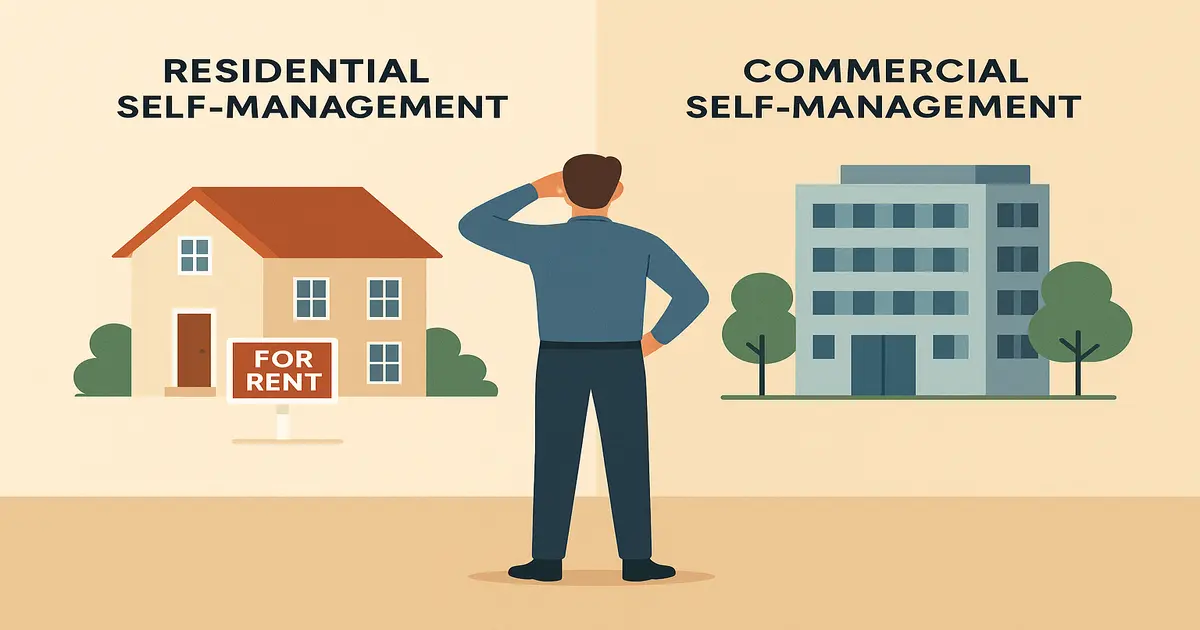
Managing property without the involvement of an agent is an increasingly popular route for landlords. However, the dynamics of residential vs commercial self-management differ significantly.
Each path presents unique responsibilities, benefits, and potential pitfalls that landlords must weigh carefully before committing.
In this article, we examine the key differences between managing residential and commercial properties, outlining what landlords need to know to operate legally, efficiently, and profitably.
Understanding Residential Self-Management
Residential self-management refers to landlords directly handling the day-to-day operations of rental properties such as houses, flats, or apartments.
This includes:
- Advertising vacancies
- Screening tenants
- Drafting tenancy agreements
- Collecting rent
- Managing maintenance and repairs
- Handling disputes and evictions
In residential settings, landlords typically deal with individuals or families. As such, the relationship is personal, highly regulated, and often emotionally charged.
Advantages of Residential Self-Management
Cost Savings
By avoiding agent fees, landlords retain a larger portion of the rental income. For smaller portfolios, this can represent thousands in savings annually.
Direct Control
Landlords who self-manage maintain complete oversight of tenant selection, rent collection, and property standards. This reduces reliance on agents who may not always prioritise the landlord’s best interests.
Stronger Tenant Relationships
Direct interaction enables landlords to establish rapport with tenants, fostering better communication and cooperation when issues arise.
Challenges of Residential Self-Management
Time-Consuming Responsibilities
Landlords must be readily available for repairs, inspections, and any disputes that may arise. For those balancing careers or multiple properties, this can quickly become overwhelming.
Legal Compliance
Residential tenancies are subject to stringent laws governing deposits, safety certificates, eviction notices, and rent increases. A single oversight may result in penalties or legal disputes.
Emotional Stress
Dealing with tenants in their homes often involves sensitive situations, from late payments to neighbour complaints. This personal connection can make enforcement of rules difficult.
Understanding Commercial Self-Management
Commercial self-management applies to properties such as offices, retail shops, warehouses, and industrial units. Unlike residential arrangements, tenants are typically businesses rather than individuals.
Key responsibilities include:
- Negotiating commercial leases
- Ensuring compliance with health and safety regulations
- Managing building maintenance contracts
- Handling rent reviews and service charges
- Overseeing longer-term lease obligations
Commercial leases are often more complex than residential agreements, typically running for several years with detailed clauses regarding rent escalation, maintenance obligations, and permitted uses.
Advantages of Commercial Self-Management
Longer Lease Terms
Commercial tenants usually commit to multi-year leases, reducing void periods and providing consistent cash flow.
Professional Tenants
Businesses often prioritise paying rent on time to maintain their operations, reducing the risk of non-payment compared to residential tenants.
Greater Profit Potential
Commercial properties can generate higher returns, particularly in prime locations, and landlords may pass on costs such as maintenance through service charges.
Challenges of Commercial Self-Management
Complex Legal Framework
Commercial leases require a strong understanding of property law. Clauses around rent reviews, break options, and repairing obligations can be intricate and open to dispute.
Higher Stakes
Commercial tenants expect professional management. Poor upkeep or mismanagement can damage the landlord’s reputation and risk losing high-value tenants.
Market Volatility
The retail and office sectors are susceptible to economic shifts. Vacancies may take months or even years to fill, especially in areas with declining business demand.
Residential vs Commercial Self-Management: Key Differences
Regulatory Environment
- Residential landlords face significant regulation that protects tenants’ rights, including deposit schemes and eviction laws.
- Commercial landlords deal with less direct regulation but more complex contract negotiations.
Tenant Relationship
- Residential tenants are individuals requiring clear communication and personal attention.
- Commercial tenants are businesses focused on operational needs and contractual precision.
Income Stability
- Residential tenancies offer a steady but modest income, characterized by shorter terms and a potential for frequent turnover.
- Commercial leases deliver longer-term income but may be riskier during economic downturns.
Maintenance Obligations
- In residential settings, landlords often bear the cost of repairs and upkeep.
- In commercial leases, tenants may accept responsibility for repairs and service charges, thereby reducing the landlord’s expenses.
Which Option Suits You as a Landlord?
The choice between residential and commercial self-management depends on your portfolio, time, and expertise.
Residential may suit you if:
- You own a small number of properties.
- You value personal control and tenant relationships.
- You are willing to keep up with housing regulations.
Commercial may suit you if:
- You have experience with contracts and business negotiations.
- You prefer long-term, higher-value tenancies.
- You are comfortable managing risk in fluctuating markets.
Tips for Successful Residential Self-Management
- Stay compliant: Keep up-to-date with landlord-tenant laws, safety checks, and eviction procedures.
- Screen tenants carefully: Use credit checks, references, and interviews to reduce the risk of arrears.
- Document everything: Maintain clear records of agreements, communications, and payments.
- Invest in systems: Utilise digital rent collection platforms and property management apps to streamline your processes and save time.
Tips for Successful Commercial Self-Management
- Engage professionals: Utilize solicitors to draft and review leases, thereby avoiding costly disputes.
- Know your market: Monitor rental demand and property trends to stay ahead of the competition.
- Be proactive with maintenance: Businesses expect professional standards—neglect can damage tenant relationships.
- Plan for voids: Keep a financial buffer for vacant periods, which may be longer in commercial sectors.
Common Pitfalls to Avoid
Residential:
- Ignoring tenant complaints, which may escalate into disputes.
- Mishandling deposits can lead to legal claims.
- Being too lenient with rent arrears.
Commercial:
- Using poorly drafted leases that fail to protect the landlord.
- Underestimating vacancy risks during economic downturns.
- Failing to manage service charges transparently can lead to tenant dissatisfaction.
Future of Self-Management
The rise of digital platforms has made both residential and commercial self-management more accessible. Online tools for marketing, rent collection, and legal templates reduce administrative burden.
However, with increased regulatory scrutiny in the residential sector and evolving demands in commercial property markets, landlords must remain proactive, adaptable, and well-informed to stay ahead of the curve.
FAQs
What is the main difference between residential and commercial self-management?
Residential focuses on individuals and families, with heavier regulations but lower risks, whereas commercial deals involve businesses, offering higher returns but greater complexity.
Can one landlord manage both residential and commercial properties?
Yes, but it requires expertise in two very different regulatory and contractual environments. Many landlords eventually specialise in one sector.
Is commercial self-management riskier than residential?
Commercial investments offer higher potential returns but carry greater risks, especially during economic downturns when vacancies can persist for more extended periods.
Do I need legal support for self-management?
Yes. Residential landlords should seek legal advice on tenancy agreements and eviction notices, while commercial landlords must rely on solicitors for lease negotiations.
Conclusion
Residential vs commercial self-management presents landlords with two distinct paths residential offers more regulation but manageable personal interactions. Commercial demands professional oversight but can deliver higher financial rewards.
Ultimately, the right choice depends on your property portfolio, risk tolerance, and willingness to invest time in learning the legal and operational requirements that govern the industry.
Landlords who approach either route with diligence, knowledge, and professionalism stand the best chance of long-term success.
Our top-read blogs:
Is Commercial Property a Good Investment in England & Wales?
Commercial Property Rent Review Protocol
Investing in Commercial Property vs Residential Property: The Advantages and Disadvantages
The British Landlords Association is a national landlord association, one of the largest in the UK. The BLA is the only landlords’ association in the UK that represents and supports both commercial and residential landlords. Join us now for £89.95!