New EPC/Energy Efficiency Rules in Scotland by 2026: What Landlords Must Upgrade to Stay Lettable
Scotland is moving towards a low-carbon future, and landlords are now at the centre of these changes. By 2026, new EPC/Energy Efficiency Rules in Scotland will reshape how properties are assessed, let, and maintained.
These rules are not only about meeting government targets but also about ensuring properties remain legally lettable and financially competitive in a tightening rental market.
In this article, we examine the key changes, practical upgrades that landlords must undertake, and the risks associated with non-compliance.
The focus is on how the New EPC/Energy Efficiency Rules in Scotland, by 2026, affect private rented homes, commercial properties, and the long-term viability of landlords’ investments.
Why the New EPC/Energy Efficiency Rules in Scotland by 2026 Matter
Scotland’s net-zero target of 2045 sets a faster pace than the rest of the UK. Housing and buildings contribute significantly to carbon emissions, with heating being the primary source of these emissions. The Government’s solution is a staged pathway, and 2026 marks a pivotal date for landlords.
The New EPC/Energy Efficiency Rules in Scotland, effective by 2026, will require landlords to meet stricter minimum energy efficiency standards before granting new leases.
This means many older, poorly insulated, or inefficiently heated properties could fall out of the lettable market if upgrades are not made in time.
Failure to comply risks enforcement action, rent voids, fines, and diminished property values. Conversely, early compliance can secure stronger rental demand and futureproof investments.
The 2026 EPC Targets for Landlords
The Scottish Government’s proposed framework outlines staged requirements, with 2026 serving as the first hard deadline. Landlords should be aware of:
- Minimum EPC Band C for new tenancies: Most private rented sector homes will need to achieve an EPC rating of Band C before a new lease can be granted.
- Progressive tightening: The goal is to bring the majority of homes up to an EPC rating of B or equivalent by the early 2030s.
- Commercial property obligations: Energy efficiency rules will not be limited to residential lettings; business premises are also being drawn into mandatory upgrade requirements.
Landlords ignoring these targets risk their property being deemed “unlettable” from 2026 onwards.
Key Upgrades Landlords Must Make
To comply with the New EPC/Energy Efficiency Rules in Scotland by 2026, landlords need to focus on practical, cost-effective upgrades.
Insulation Improvements
- Loft and roof insulation up to modern standards.
- Cavity wall insulation, where applicable.
- Solid wall insulation for older tenement and stone properties.
These measures provide the most significant uplift in EPC ratings and directly cut tenant heating bills.
Heating System Upgrades
- Replacing old gas or oil boilers with modern condensing systems.
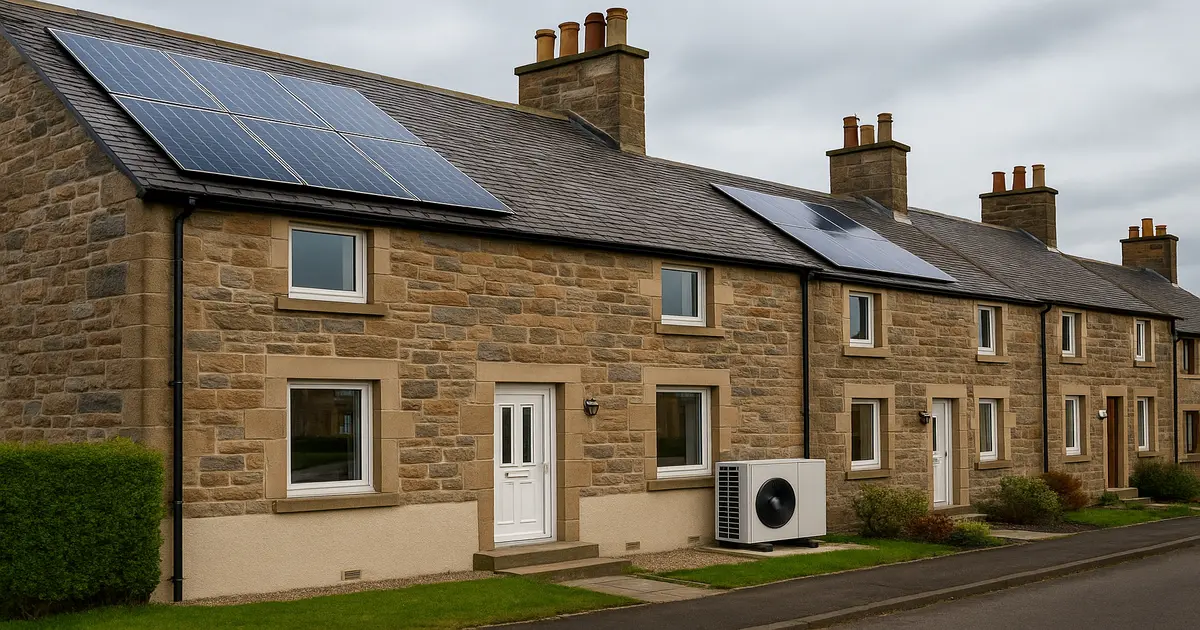
- Preparing for low-carbon alternatives such as heat pumps and hybrid systems.
- Installing smart heating controls for efficient use.
Glazing and Draught Proofing
- Double or triple glazing is increasingly expected.
- Sealing air leaks and ensuring proper ventilation balance.
Renewable Energy Integration
- Solar PV panels for on-site electricity generation.
- Battery storage is where feasible.
- Solar thermal water heating for hot water demand.
Lighting and Appliances
- Switching to LED lighting throughout.
- Ensuring landlord-provided appliances meet energy-efficient standards.
Each of these upgrades contributes directly to meeting the New EPC/Energy Efficiency Rules in Scotland by 2026, making a property lettable and attractive to tenants.
Cost Considerations for Landlords
The financial impact varies depending on property age, type, and condition. A post-1980s flat may only require low-cost interventions, such as LED lighting and loft insulation, while a pre-1919 sandstone tenement could demand thousands of pounds in wall insulation and heating replacement.
Funding support is available through Scottish Government schemes, including grants and low-interest loans specifically designed for landlords. However, availability can fluctuate, and proactive landlords should apply early to avoid missing out.
Crucially, upgrades are not just compliance costs—they can increase rental yield, tenant satisfaction, and long-term asset value.
Risks of Ignoring the New EPC/Energy Efficiency Rules in Scotland by 2026
Non-compliance brings both legal and financial consequences:
- Unlettable properties: Without an EPC C rating, new tenancies cannot legally commence.
- Enforcement fines: Local authorities will be empowered to investigate and penalise non-compliant landlords.
- Devaluation of assets: Inefficient properties will be less attractive to buyers, lenders, and tenants.
- Tenant disputes: Renters increasingly demand energy-efficient homes; failure to provide this could lead to reputational damage.
Landlords must act now to avoid being locked out of the market by 2026.
Strategic Planning for Landlords
Adapting to the New EPC/Energy Efficiency Rules in Scotland by 2026 requires more than quick fixes—it calls for a strategic plan.
- Audit your portfolio: Commission EPC assessments now to identify areas for improvement.
- Prioritise worst performers: Target properties with an EPC rating of D or lower first.
- Budget over time: Spread upgrades across 2025 and 2026 to avoid a last-minute rush.
- Engage professionals: Utilise accredited assessors and contractors who are familiar with Scottish regulations.
- Monitor policy changes: The framework may be tightened further towards 2030, so avoid “minimum only” upgrades that will soon be outdated.
Opportunities for Proactive Landlords
While some landlords view the 2026 rules as a burden, others see them as an opportunity.
- Competitive edge: Energy-efficient homes command higher rents and lower voids.
- Futureproofing: Investing ahead of deadlines ensures compliance well beyond 2026.
- Green finance access: Lenders are increasingly preferring energy-efficient properties, which offer better mortgage terms.
- Positive branding: Marketing a property as compliant with the New EPC/Energy Efficiency Rules in Scotland by 2026 appeals to eco-conscious tenants.
Landlords who embrace change will position themselves for success in a shifting market.
Preparing for the 2030s and Beyond
The 2026 deadline is only the beginning. The Scottish Government aims to raise standards again in the early 2030s, pushing towards EPC B or equivalent low-carbon standards. This means landlords should think beyond compliance and aim for higher efficiency now.
Investments in renewable energy, heat pumps, and whole-building fabric improvements will pay dividends as the regulatory net tightens. A short-term fix may suffice for 2026, but forward-thinking landlords will strive for a more comprehensive solution in the future.
FAQs
What is the minimum EPC rating required for rental properties in Scotland by 2026?
Landlords must achieve an EPC rating of Band C before granting a new tenancy.
Will existing tenancies be affected in 2026?
The rules primarily apply to new leases, but over time, existing tenancies will also be affected as the framework becomes more stringent.
Are commercial landlords included?
Yes, business premises are increasingly being brought into the scope of energy efficiency regulations.
What happens if I don’t upgrade?
Properties that fail to meet EPC standards will become unlettable, and landlords may face enforcement action or fines.
Can landlords access funding help?
Yes, government schemes provide grants and loans to support upgrades, though demand is high and funds are limited.
Conclusion
The New EPC/Energy Efficiency Rules in Scotland by 2026 represent a turning point for landlords. Compliance is no longer optional—it is essential for protecting rental income, asset value, and maintaining a strong legal standing.
Landlords must act now by auditing properties, planning upgrades, and taking advantage of funding opportunities. Those who move early will reap rewards, while those who delay risk costly enforcement and stranded assets.
The message is clear: prepare today for the 2026 rules, and you will not only stay lettable but thrive in Scotland’s low-carbon rental future.
Our top-read blogs:
Is Commercial Property a Good Investment in England & Wales?
Commercial Property Rent Review Protocol
Investing in Commercial Property vs Residential Property: The Advantages and Disadvantages
The British Landlords Association is a national landlord association, one of the largest in the UK. The BLA is the only landlords’ association in the UK that represents and supports both commercial and residential landlords. Join us now for £89.95!
Useful External Links
https://www.gov.scot/policies/energy-efficiency/
https://www.gov.uk/buy-sell-your-home/energy-performance-certificates