Minimum Home Standards and the Expansion of ‘Awaab’s Law’ via the Renters’ Rights Act 2025
The Renters’ Rights Act 2025 introduces one of the most significant health and safety reforms in the English private rental market to date — the extension of Awaab’s Law principles to private landlords.
The aim is to ensure that every rented home, whether social or private, meets safe and healthy living standards.
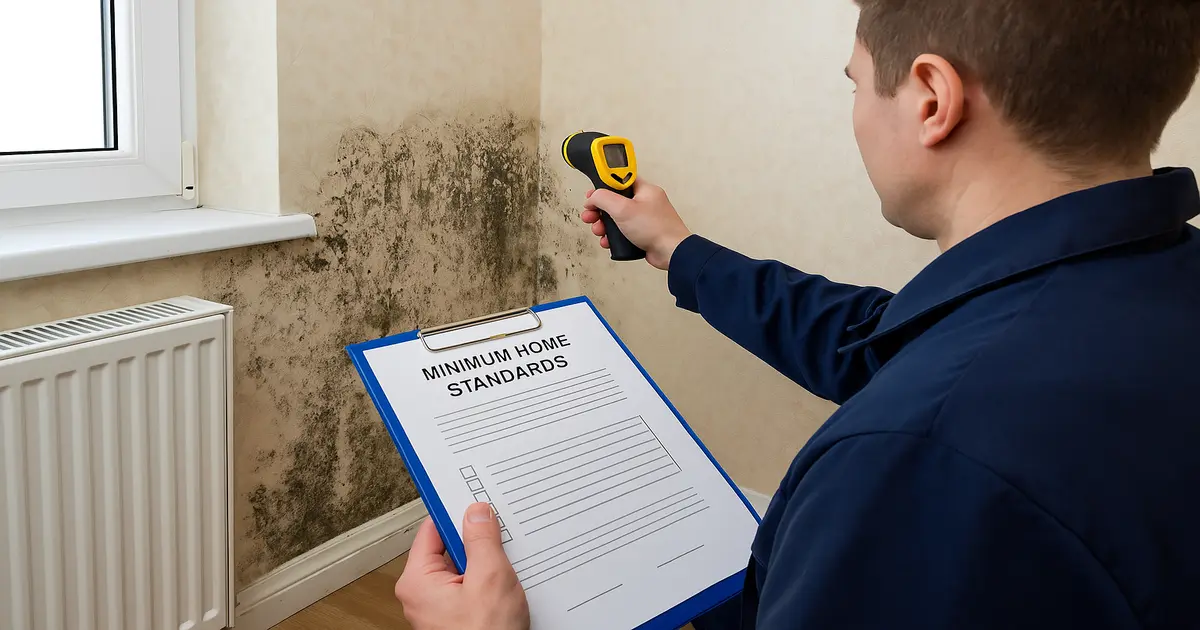
The minimum home standards and the expansion of Awaab’s Law via the Renters’ Rights Act 2025 are designed to tackle persistent issues such as damp, mould, disrepair, and poor energy efficiency, ensuring landlords take prompt action when hazards are reported.
For landlords, these changes will reshape property management responsibilities, increase accountability, and impose stricter timelines for resolving hazards that pose a threat to tenant health.
What the Change Is: Extension of Duties (Originally in Social Sector Under Awaab’s Law) into Private Rented Sector; Higher Standards for Hazard Remediation, Minimum Energy Efficiency, etc.
Awaab’s Law, named after two-year-old Awaab Ishak, who tragically died in 2020 from prolonged exposure to black mould in social housing, was initially introduced under the Social Housing (Regulation) Act 2023.
That Law imposed strict duties on social landlords to fix serious health and safety hazards within defined time limits once reported by tenants.
The Renters’ Rights Act 2025 now expands those same principles to the private rented sector, setting new benchmarks for property condition and landlord responsibility.
Key provisions include:
- Mandatory hazard remediation timelines: Landlords must investigate and repair health or safety risks such as damp, mould, structural disrepair, faulty electrics, or pest infestations within set timeframes once reported.
- Minimum housing standards: Private rented homes must comply with the new Decent Homes Standard criteria, which align with those already applicable to social housing. This includes requirements for modern facilities, adequate heating, and insulation.
- Energy efficiency upgrades: Landlords must continue to improve property energy performance, moving toward EPC band C by 2030, with interim progress expected under the new standard.
- Accountability and enforcement: Local authorities will gain stronger powers to inspect, issue improvement notices, and impose fines for non-compliance.
The minimum home standards and the expansion of Awaab’s Law via the Renters’ Rights Act 2025 mark a decisive shift toward uniform housing quality across all tenures — ending the historic divide between social and private rented homes.
When It Applies: Part of the Broader Reforms; Some Social Housing Parts Already in Effect; Private Sector to Follow
While Awaab’s Law provisions for social landlords came into force in 2024, their extension to the private rented sector will commence alongside the wider Renters’ Rights Act reforms.
The Government has confirmed that commencement will occur in stages from 2026, once secondary regulations and enforcement frameworks are finalised.
Expected rollout timeline:
- Social sector compliance: Already active since 2024.
- Private rented sector enforcement: Expected from mid to late 2026, following publication of PRS-specific regulations.
- Energy efficiency standards: Gradual introduction ahead of the 2030 EPC C requirement, ensuring landlords make timely improvements.
The transitional period will allow private landlords to prepare by carrying out property audits and upgrading key systems. However, once in force, landlords who fail to address serious hazards quickly could face enforcement notices or potential prosecution.
Documents to Await: Regulations on Decent Homes Standard for PRS, Guidance for Landlords
Several critical documents will guide the application of minimum home standards and the expansion of Awaab’s Law via the Renters’ Rights Act 2025 in the private rented sector. These will be published by the Department for Levelling Up, Housing and Communities (DLUHC) over the coming months.
Landlords should look out for:
- The Private Rented Sector Decent Homes Standard Regulations (2026): These will formally define what constitutes a “decent” private rented home and outline acceptable repair and hazard response times.
- Official Awaab’s Law Guidance Notes: Detailing the process for responding to tenant complaints and deadlines for inspection and remediation.
- Energy Efficiency and Retrofit Regulations: Expanding on the requirement for EPC band C improvements, expected to phase in between 2026 and 2030.
- Local Authority Enforcement Guidance: Clarifying inspection rights, civil penalty procedures, and landlord appeal mechanisms.
The British Landlords Association (BLA) will issue comprehensive summaries of these documents and template compliance checklists for its members once the regulations are enacted.
What Landlords Need to Do Now: Audit Properties, Prepare for New Inspection Regimes
To comply with the forthcoming minimum home standards and the expansion of Awaab’s Law via the Renters’ Rights Act 2025, landlords should take proactive measures now rather than waiting for enforcement to begin.
Conduct Property Audits
Assess all rental units for potential hazards, including damp, mould, poor ventilation, leaks, or unsafe wiring. Record findings and create a maintenance plan to demonstrate diligence.
Improve Energy Performance
Begin upgrading insulation, windows, and heating systems to meet EPC band C targets. Prioritise older stock or properties with low EPC ratings.
Establish Repair Timelines and Procedures
Create an internal policy for responding to tenant-reported issues. Landlords will be expected to inspect within days of a complaint and complete repairs within strict statutory deadlines.
Keep Detailed Records
Maintain written logs of all tenant reports, inspections, repair invoices, and communications. This documentation will be crucial if a dispute or enforcement action arises.
Review Letting Agent Arrangements
Ensure that agents handling maintenance or tenant communication understand their duties under the new regime and have clear escalation protocols in place.
Join a Recognised Association
Membership with organisations like the British Landlords Association provides access to legal updates, compliance templates, and professional support during the rollout of these reforms.
Preparing early will allow landlords to spread upgrade costs, minimise risk, and maintain compliance once the new inspection framework takes effect.
FAQs
What is Awaab’s Law?
Awaab’s Law was introduced after the death of Awaab Ishak in 2020 to compel social landlords to fix hazardous living conditions like mould within strict time limits.
Does Awaab’s Law now apply to private landlords?
Yes. The Renters’ Rights Act 2025 expands Awaab’s Law principles into the private rented sector, holding private landlords to the same safety and repair standards.
When do private landlords need to comply?
Full enforcement for the private rented sector is expected from 2026, after new regulations are finalised.
What happens if a landlord fails to act?
Failure to investigate or fix reported hazards within the required timeframes could result in local authority penalties, rent repayment orders, or potential prosecution.
Will landlords get time to prepare?
Yes. There will be a transitional period, but proactive landlords are urged to begin audits and improvements now.
Conclusion
The minimum home standards and the expansion of Awaab’s Law via the Renters’ Rights Act 2025 represent a historic step toward safer, healthier private rental housing.
By extending these protections to private tenants, the Government seeks to eliminate substandard living conditions and raise the overall quality of the housing market.
Landlords who take early action auditing properties, addressing hazards, and improving energy efficiency will not only remain compliant but also enhance the value and reliability of their rental portfolios.
The British Landlords Association will continue to guide members through these reforms to ensure full readiness before the new standards become Law.
Our top-read blogs:
Is Commercial Property a Good Investment in England & Wales?
Commercial Property Rent Review Protocol
Investing in Commercial Property vs Residential Property: The Advantages and Disadvantages
The British Landlords Association is a national landlord association, one of the largest in the UK. The BLA is the only landlords’ association in the UK that represents and supports both commercial and residential landlords. Join us now for £89.95!