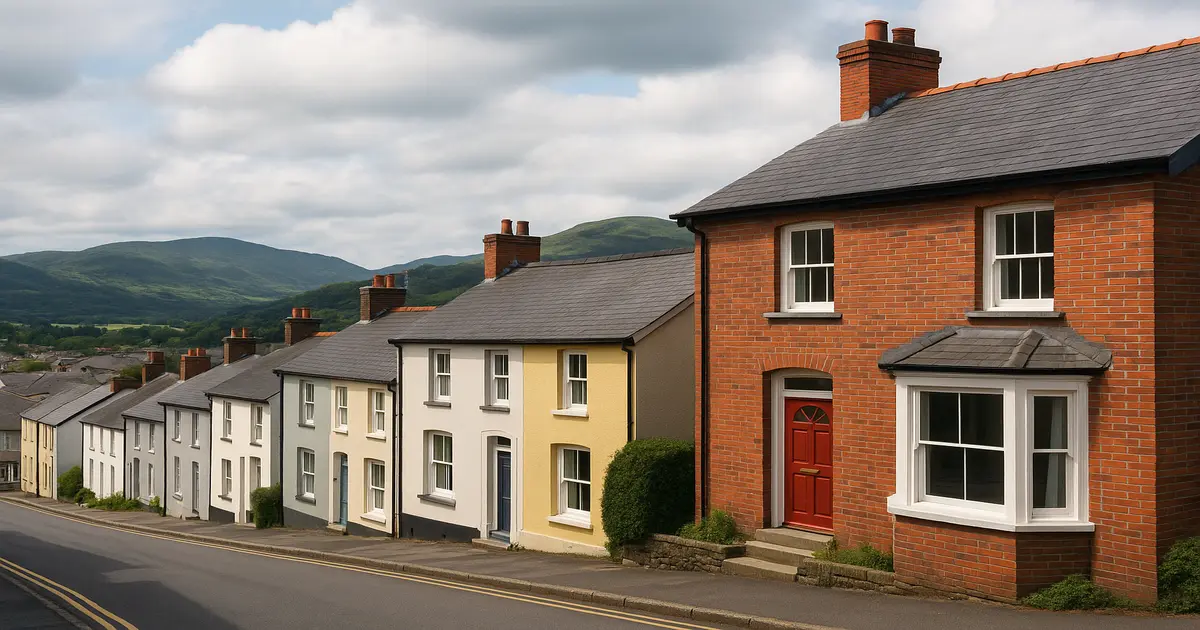
Welsh Housing Market Sees Prices Dip but Buyer Activity Improves
The latest property data shows a mixed outlook for Wales as the Welsh housing market sees prices dip, but buyer activity improves. Despite a decline in average property prices, growing buyer interest is injecting renewed optimism into the sector.
This trend suggests that the market is stabilising after months of economic uncertainty, interest rate fluctuations, and subdued confidence among sellers.
Prices Ease but Demand Holds Steady
According to recent figures, the Welsh housing market sees prices dip but buyer activity improves as affordability pressures ease. Average house prices in Wales have fallen by around 2% compared to last year.
While this marks a slowdown in growth, it has made property ownership slightly more attainable for first-time buyers and investors who were previously priced out of the market.
We see that local agents are reporting more property viewings and higher offer volumes. Lower competition from buy-to-let investors and cautious pricing strategies have created opportunities for residential buyers to re-enter the market.
Although sellers are achieving slightly lower sale prices than during the 2022–2023 peaks, the pace of transactions has quickened.
The Role of Mortgage Rates in Market Shifts
A significant reason why the Welsh housing market sees prices dip but buyer activity improves lies in the recent stabilisation of mortgage rates. Following a turbulent 2023, fixed-rate mortgage products have become more competitive.
As lending rates began to ease, more potential buyers sought mortgage approvals, boosting market activity across Cardiff, Swansea, and Newport.
The improved affordability of borrowing has encouraged cautious optimism. Many lenders, including Paragon and Nationwide, have reported an increase in mortgage applications in Wales.
The combination of slightly lower prices and moderate lending rates has attracted both first-time buyers and those seeking to upgrade homes.
Regional Variations in Market Performance
The Welsh housing market experiences a dip in prices, but buyer activity improves unevenly across different regions. South Wales, particularly Cardiff and the Vale of Glamorgan, continues to experience strong demand due to its employment opportunities and excellent transport links.
Meanwhile, rural areas in mid and north Wales are experiencing slower recovery due to limited local employment and lower population density.
In North Wales, properties near coastal towns and tourism hubs, such as Llandudno and Conwy, remain resilient, benefiting from demand for holiday homes and second homes.
By contrast, smaller inland towns have seen sharper declines as affordability and employment factors weigh on buyer sentiment.
Overall, while prices have softened, the increase in active buyers signals renewed life in the Welsh market heading into 2026.
First-Time Buyers Return to the Market
The trend where the Welsh housing market sees prices dip but buyer activity improves is being driven partly by first-time buyers. As prices level off, many have seized the opportunity to buy homes they could not afford during the boom years.
Government-backed schemes, lower competition from investors, and rising rental costs have encouraged this demographic to take the first step onto the property ladder.
We observe that estate agents are reporting an increase in mortgage-in-principle applications among younger buyers. This resurgence is particularly evident in South Wales, where entry-level properties remain more affordable compared to the rest of the UK.
Areas such as Bridgend and Neath Port Talbot are also seeing renewed demand due to strong transport links and comparatively lower housing costs.
Sellers Adapting to Market Realities
Sellers have adapted to this new phase as the Welsh housing market sees prices dip, but buyer activity improves. Many homeowners who had been holding out for higher valuations have now adjusted their expectations, pricing their properties realistically to attract buyers.
This adjustment has resulted in quicker sales and fewer properties remaining on the market.
This pragmatic approach will sustain the positive momentum in buyer activity. Agents across Wales are noting that well-priced properties continue to sell quickly, particularly in areas with high rental yields or good commuter connections.
Sellers who recognise current market realities are more likely to secure timely transactions.
Outlook for the Welsh Property Market
Although the Welsh housing market sees prices dip, buyer activity improves, and the medium-term outlook remains encouraging. Analysts expect prices to stabilise by mid-2026 as consumer confidence returns.
With wage growth and falling inflation, demand for both residential and investment properties is expected to remain strong.
If interest rates continue to hold steady or fall, a gradual price recovery may occur in late 2026. However, buyers are now more value-conscious, seeking properties that offer long-term affordability, energy efficiency, and convenient location.
This shift may reshape demand patterns, particularly in urban regeneration zones and affordable commuter belts.
Investment Opportunities in a Cooling Market
For investors, the Welsh housing market is experiencing a dip in prices, but buyer activity is improving, presenting strategic opportunities.
As yields in England’s southern regions compress, Welsh cities are becoming more attractive. Investors targeting long-term income rather than short-term flips are looking closely at Wales.
Regions such as Newport and Swansea, with strong rental demand, continue to produce yields above the average.
The cooling of sale prices gives investors an entry advantage, especially where rental demand outpaces housing supply. For those willing to invest in property upgrades or HMOs, the medium-term returns could be substantial.
Challenges and Caution Ahead
Despite improved activity, the Welsh housing market sees prices dip, but buyer activity improves amid ongoing challenges. Construction costs, planning delays, and limited new housing supply continue to restrict availability.
Moreover, local councils are tightening second-home rules in popular coastal regions, affecting investors seeking short-term lets.
While overall sentiment is improving, the pace of recovery will depend on broader UK economic stability. If inflation or interest rates rise unexpectedly, buyer confidence may weaken again.
Nonetheless, the foundations of the Welsh market remain solid, supported by demand from both local and relocating buyers.
FAQs
Why have Welsh property prices dipped?
Prices have fallen mainly due to higher mortgage costs in 2023, slower demand, and increased supply in certain regions. However, this has improved affordability for many buyers.
Why is buyer activity improving now?
With mortgage rates stabilising and prices softening, more buyers are confident to act. Improved job stability and easing inflation also play a role.
Which areas of Wales are performing best?
Cardiff, Newport, and Swansea continue to experience strong demand, while some rural areas are recovering more slowly due to limited economic activity.
Is this a good time to buy in Wales?
Yes. For buyers seeking long-term value, lower prices and moderate lending rates make this a favourable period to purchase property in Wales.
Will prices rise again soon?
Analysts expect price stabilisation by mid-2026. A modest recovery is possible if borrowing costs remain manageable and demand continues to strengthen.
Conclusion
The Welsh housing market sees prices dip but buyer activity improves, indicating a healthy adjustment phase rather than a downturn. Price corrections have encouraged more buyers to return, while sellers are becoming more realistic in expectations.
The result is a more balanced property market poised for steady growth over the next year. With sustained demand and improving affordability, Wales remains a strong contender for both homeowners and investors seeking long-term value.
Our top-read blogs:
Is Commercial Property a Good Investment in England & Wales?
Commercial Property Rent Review Protocol
Investing in Commercial Property vs Residential Property: The Advantages and Disadvantages
The British Landlords Association is a national landlord association, one of the largest in the UK. The BLA is the only landlords’ association in the UK that represents and supports both commercial and residential landlords. Join us now for £89.95!