- Description
- Curriculum
- FAQ
Course Description: Scottish Landlord Compliance & Property Safety Masterclass
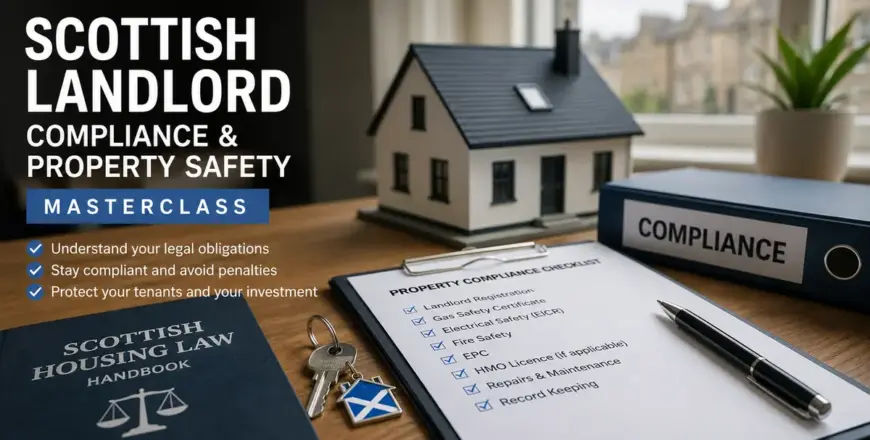
The Scottish Landlord Compliance & Property Safety Masterclass is a comprehensive training course designed to help landlords, letting agents, and property managers understand and meet their legal responsibilities when renting property in Scotland.
This course provides a clear, structured breakdown of key legislation and compliance duties, including landlord registration, the Repairing Standard, the Tolerable Standard, safety regulations (gas, electrical, fire, and carbon monoxide), and housing condition requirements. It also covers HMO licensing, short-term let regulations, local authority rules, inspection procedures, and record-keeping best practices.
You will learn how to identify compliance risks, manage ongoing legal obligations, and implement effective systems for inspections, maintenance, and documentation. The course also includes practical guidance on dealing with repairs, preventing common compliance failures, and preparing for local authority inspections or tribunal cases.
By the end of the course, you will have a strong understanding of Scottish housing law and the confidence to manage rental properties safely, legally, and professionally while reducing risk and avoiding enforcement action.
Module 1: Landlord Registration & Legal Responsibilities
-
1
 Lesson 1: Understanding Landlord Registration in Scotland
Lesson Description: Understanding Landlord Registration in Scotland
This lesson provides a comprehensive introduction to Scotland's landlord registration scheme and explains why registration is a legal requirement for anyone letting residential property. You will learn who must register, how to complete the application process through your local authority, and the criteria used to assess whether a landlord is a fit and proper person.
The lesson also examines the penalties and legal consequences of failing to register, helping you understand how to remain compliant and avoid enforcement action. By the end of this lesson, you will have a clear understanding of your registration responsibilities and the steps needed to operate legally as a landlord in Scotland.
-
2
Lesson 2: Letting Agent Registration & Compliance
Lesson Description: Letting Agent Registration & Compliance
This lesson explains the legal framework governing letting agents in Scotland and the standards they must meet to operate lawfully. You will gain an understanding of the Letting Agent Code of Practice, the requirements for registration on the Register of Letting Agents (RLA), and the professional duties agents owe to both landlords and tenants.
The lesson also examines how compliance is monitored, the enforcement powers available to regulators, and the penalties that may be imposed for breaches of the law. By the end of this lesson, you will understand how regulated letting agents support legal compliance and protect the interests of all parties involved in the letting process.
-
3
Lesson 3: Core Legal Duties of Scottish Landlords
Lesson Description: Core Legal Duties of Scottish Landlords
This lesson examines the key legal responsibilities that every private landlord in Scotland must meet throughout a tenancy. You will learn about your obligations under the Housing (Scotland) Act 2006, including the Repairing Standard, tenancy deposit protection requirements, and the essential documents that must be provided to tenants.
The lesson also highlights common compliance failures and offers practical guidance on how to avoid them. By the end of this lesson, you will have a clear understanding of your core legal duties and how to remain compliant while providing safe and professionally managed rental accommodation.
⚡ Module 2: Electrical Safety Compliance
-
4
Lesson 1: Electrical Installation Condition Reports (EICR)
Lesson Description: Electrical Installation Condition Reports (EICR)
This lesson explains the legal requirements for Electrical Installation Condition Reports (EICRs) in Scotland's private rented sector and why they are essential for ensuring tenant safety.
You will learn when an EICR is required, the recommended inspection intervals, and how to interpret the different observation codes, including C1, C2, C3 and FI. The lesson also covers your responsibilities as a landlord following an inspection, including arranging remedial work, maintaining records, and ensuring your property remains compliant with electrical safety legislation. By the end of this lesson, you will understand how to manage EICRs effectively and fulfil your legal obligations as a Scottish landlord.
-
5
Lesson 2: Portable Appliance Testing (PAT)
Lesson Description: Portable Appliance Testing (PAT)
This lesson explains the role of Portable Appliance Testing (PAT) in maintaining electrical safety within privately rented properties in Scotland. You will learn when PAT testing is required, when it may not be necessary, and the best practice recommendations for furnished properties and Houses in Multiple Occupation (HMOs).
The lesson also covers the importance of maintaining accurate records and certification, as well as clarifying the landlord's responsibilities for appliances they provide compared with those owned by tenants. By the end of this lesson, you will understand how to manage portable electrical appliance safety effectively and demonstrate compliance with your legal responsibilities.
-
6
Lesson 3: Electrical Safety Risk Management
Lesson Description: Electrical Safety Risk Management
This lesson focuses on how landlords can proactively manage electrical safety risks within rental properties in Scotland. You will learn how to identify common electrical hazards, including overloaded circuits, ageing or faulty wiring, and unsafe DIY alterations.
The lesson also explains the importance of maintaining proper documentation as evidence of compliance and outlines how to effectively manage and prioritise remedial works when issues are identified. By the end of this lesson, you will understand how to take a proactive, risk-based approach to electrical safety and reduce the likelihood of hazards, disputes, or enforcement action.
Module 3: Gas Safety & Carbon Monoxide Protection
-
7
Lesson 1: Gas Safety (Landlord Obligations)
Lesson Description: Gas Safety (Landlord Obligations)
This lesson explains the legal responsibilities landlords in Scotland must meet under gas safety legislation to ensure rental properties remain safe for tenants. You will learn about the Gas Safety (Installation and Use) Regulations, the requirement for annual gas safety checks, and the importance of using only Gas Safe registered engineers.
The lesson also covers essential record-keeping obligations, including how to obtain, store, and provide valid Gas Safety Records. By the end of this lesson, you will understand how to maintain full compliance with gas safety law and protect tenants from the risks associated with unsafe gas appliances and installations.
-
8
Lesson 2: Carbon Monoxide Safety
-
9
Lesson 3: Boilers, Heating Systems & Maintenance
Module 4: Fire Safety & Furniture Compliance
-
10
Lesson 1: Fire Safety Duties in Private Lets
Lesson Description: Fire Safety Duties in Private Lets
This lesson introduces the core fire safety responsibilities of landlords in Scottish private rented properties. You will learn the basics of fire risk assessment, including how to identify hazards and ensure adequate escape routes and warning systems are in place. The lesson also explains the differences in fire safety expectations between single lets and properties with shared areas, such as HMOs.
Finally, it covers the potential enforcement risks associated with non-compliance. By the end of this lesson, you will understand how to manage fire safety duties effectively and reduce risk to both tenants and property.
-
11
Lesson 2: Furniture & Furnishings Regulations
Lesson Description: Furniture & Furnishings Regulations
This lesson explains the legal requirements under the Furniture and Furnishings (Fire Safety) Regulations and how they apply to privately rented properties in Scotland. You will learn about the mandatory fire safety standards for upholstered furniture and furnishings, including labelling requirements that confirm compliance.
The lesson also highlights the risks associated with non-compliant or outdated furniture and provides practical guidance on how to check and manage existing inventory to ensure ongoing compliance. By the end of this lesson, you will understand how to identify safe furnishings and reduce fire risks within your rental properties.
-
12
Lesson 3: Smoke, Heat & Fire Detection Systems
Lesson Description: Smoke, Heat & Fire Detection Systems
This lesson explains the requirements for smoke, heat, and fire detection systems in Scottish rental properties and how they form a critical part of fire safety compliance. You will learn the Scottish standards for alarm provision, including where different types of alarms must be installed and when interlinked systems are required.
The lesson also covers the differences between battery-powered and mains-powered alarms, as well as landlord responsibilities for regular testing, maintenance, and replacement. By the end of this lesson, you will understand how to ensure your property has an effective and compliant fire detection system that protects tenants and meets legal obligations.
💧 Module 5: Health, Damp, EPC & Ventilation
-
13
Lesson 1: Legionella Risk Management
-
14
Lesson 2: EPC Requirements & Energy Efficiency
Lesson Description: EPC Requirements & Energy Efficiency
This lesson explains the Energy Performance Certificate (EPC) requirements that apply to privately rented properties in Scotland and how landlords can improve the energy efficiency of their properties. You will learn about the current EPC standards, proposed future energy efficiency legislation, and practical, cost-effective ways to improve a property's energy rating.
The lesson also covers circumstances where exemptions may apply and the process for obtaining them. By the end of this lesson, you will understand how to meet EPC obligations, prepare for future regulatory changes, and make informed decisions about improving your property's energy performance.
-
15
Lesson 3: Damp, Mould & Ventilation Control
Lesson Description: Damp, Mould & Ventilation Control
This lesson explains how landlords in Scotland can identify, manage, and prevent damp, mould, and poor ventilation issues in rental properties. You will learn the common causes of condensation and mould growth, how responsibilities are divided between landlords and tenants, and the ventilation standards that apply to habitable rooms, kitchens, and bathrooms.
The lesson also covers the role of extractor fans and other ventilation systems, along with practical prevention strategies and inspection techniques to help identify problems early. By the end of this lesson, you will understand how to maintain healthier living conditions, reduce the risk of property damage, and meet your obligations under the Repairing Standard.
🏠 Module 6: Property Standards & Repairs
-
16
Lesson 1: The Repairing Standard (Scotland)
Lesson Description: The Repairing Standard (Scotland)
This lesson provides a detailed overview of the Repairing Standard that applies to privately rented properties in Scotland under the Housing (Scotland) Act 2006. You will learn the legal framework that sets the minimum standard for rental accommodation, what constitutes a breach of the Repairing Standard, and the timescales within which landlords are expected to complete repairs.
The lesson also explains tenants' rights to seek enforcement through the appropriate legal processes if repairs are not carried out. By the end of this lesson, you will understand your obligations to maintain a property that is safe, habitable, and compliant with Scottish housing law.
-
17
Lesson 2: Tolerable Standard Explained
Lesson Description: Tolerable Standard Explained
This lesson introduces the Tolerable Standard, the minimum legal standard that all housing in Scotland must meet, whether rented or owner-occupied. You will learn what the standard covers, including basic requirements for safety, structural condition, and essential services such as heating, ventilation, and sanitation.
The lesson also highlights common failures found in older properties, explains the enforcement powers available to local authorities, and outlines the steps landlords can take to upgrade substandard housing. By the end of this lesson, you will understand how the Tolerable Standard interacts with wider housing regulations and how to ensure your property meets minimum legal requirements.
-
18
Lesson 3: Property Inspections & Maintenance Planning
Lesson Description: Property Inspections & Maintenance Planning
This lesson explains how effective property inspections and planned maintenance help landlords maintain safe, compliant, and well-managed rental properties in Scotland. You will learn best practices for carrying out routine inspections, how to identify early warning signs of property issues before they become serious, and how to implement seasonal maintenance planning to protect the building year-round. The lesson also covers how to properly document inspection findings to ensure clear records of compliance and repair history.
By the end of this lesson, you will understand how to take a proactive approach to property management that reduces risk, improves tenant safety, and supports long-term property condition.
🏢 Module 7: HMOs, Licensing & Short-Term Lets
-
19
Lesson 1: HMO Licensing Requirements
Lesson Description: HMO Licensing Requirements
This lesson introduces the legal requirements for Houses in Multiple Occupation (HMOs) in Scotland and explains when a property must be licensed. You will learn what qualifies as an HMO, the licensing thresholds that determine when a licence is required, and the conditions landlords must meet to operate legally.
The lesson also covers the management standards expected of HMO landlords and the inspection process used by local authorities to ensure ongoing compliance. By the end of this lesson, you will understand how HMO licensing works, your responsibilities as a landlord, and how to maintain compliant shared accommodation.
-
20
Lesson 2: Short-Term Let Licensing
Lesson Description: Short-Term Let Licensing
This lesson provides an overview of Scotland’s short-term let licensing scheme and the legal requirements for landlords operating holiday lets or Airbnb-style accommodation. You will learn how the licensing system works, when planning permission may be required, and the key safety standards that must be met to ensure guest safety and compliance.
The lesson also explains the enforcement powers available to local authorities and the penalties for operating without a licence or breaching licence conditions. By the end of this lesson, you will understand the regulatory framework governing short-term lets in Scotland and how to operate legally within it.
-
21
Lesson 3: Additional Licensing & Local Authority Rules
Lesson Description: Additional Licensing & Local Authority Rules
This lesson explains the additional licensing schemes and local authority-specific rules that may apply to private rented properties in Scotland. You will learn how different councils can introduce their own licensing requirements, including rules around overcrowding, occupancy limits, and property standards that may vary by region.
The lesson also highlights the importance of understanding local policy differences and staying up to date with changes in council regulations. By the end of this lesson, you will be able to identify how local authority rules affect landlords and ensure your properties remain fully compliant wherever they are located
📅 Module 8: Compliance Systems, Calendar & Final Assessment
-
22
Lesson 1: Annual Compliance Calendar
Lesson Description: Annual Compliance Calendar
This lesson explains how to create and maintain an effective annual compliance calendar to help landlords stay organised and fully compliant with Scottish housing regulations. You will learn how to structure monthly, quarterly, and yearly landlord responsibilities, including scheduling essential safety certifications such as gas, electrical, and fire safety checks.
The lesson also covers how to implement reliable renewal tracking systems to avoid missed deadlines and ensure ongoing legal compliance. By the end of this lesson, you will understand how to build a proactive compliance schedule that reduces risk, improves efficiency, and keeps your property portfolio fully up to date.
-
23
Lesson 2: Record Keeping & Audit Readiness
Lesson Description: Record Keeping & Audit Readiness
This lesson explains the importance of robust record-keeping for Scottish landlords and how it supports full compliance with housing legislation and regulatory inspections. You will learn what records must be maintained, including safety certificates, inspection reports, repair logs, and tenancy documentation.
The lesson also covers the differences between digital and paper-based systems and how to organise information for efficiency and reliability. In addition, it explains how to prepare for local authority inspections or tribunal cases by ensuring documentation is complete and accessible. By the end of this lesson, you will understand how to build a strong audit-ready compliance system that protects you in the event of disputes or enforcement action.
-
24
Lesson 3: Final Knowledge Assessment & Certification
Quiz - Scottish Landlord Compliance & Property Safety

Is this course suitable for new landlords?
Yes. The course is designed for both new and experienced landlords, with clear explanations of Scottish housing law and practical compliance guidance.
Does this course cover the latest Scottish landlord legislation?
Yes. It includes current requirements such as the Repairing Standard, landlord registration, safety regulations, HMO licensing, and short-term let rules.
Will I learn about safety requirements like gas and electrical checks?
Yes. The course covers gas safety, EICR requirements, fire safety standards, carbon monoxide regulations, and other key property safety obligations.
Does the course explain HMO and short-term let licensing?
Yes. Dedicated modules explain HMO licensing requirements, occupancy rules, short-term let licensing, and planning considerations in Scotland.
Will this help me prepare for council inspections or tribunal cases?
Yes. The course includes guidance on inspections, record keeping, audit readiness, and how to present compliance evidence if required.
Do I receive a certificate after completing the course?
Yes. Upon successful completion of the final assessment, you will receive a Certificate of Completion for the Scottish Landlord Compliance & Property Safety Masterclass.
Course details
Lectures
24
Quizzes
1
Level
Intermediate
Basic info
Course Information: Scottish Landlord Compliance & Property Safety Masterclass
Course Title: Scottish Landlord Compliance & Property Safety Masterclass
Level: Intermediate (suitable for new and experienced landlords)
Duration: Self-paced (approximately 2–3 hours total learning time)
Delivery Method: Online learning modules with structured lessons, case studies, and final assessment
Certification: Certificate of Completion awarded upon passing the final assessment
Course Format:
- 8 Modules
- 24 Lessons
- Practical examples and case studies
- Final multiple-choice assessment
Entry Requirements:
- No formal qualifications required
- Basic understanding of property letting is helpful but not essential
Target Audience:
- Private landlords in Scotland
- HMO landlords and shared accommodation providers
- Letting agents and property managers
- Property investors and portfolio landlords
- Short-term let operators (Airbnb/holiday lets)
Course Objectives:
- Understand Scottish landlord legal obligations
- Ensure compliance with safety and housing standards
- Learn HMO and short-term let regulations
- Improve property management and inspection practices
- Reduce legal and enforcement risk
Key Topics Covered:
- Landlord registration and legal duties
- Repairing Standard and Tolerable Standard
- Electrical, gas, fire, and CO safety requirements
- EPC, damp, mould, and ventilation control
- HMO licensing and occupancy rules
- Short-term let licensing and planning considerations
- Inspections, maintenance planning, and compliance systems
- Record keeping and audit readiness
Assessment:
- Multiple-choice quiz
- Case study-based questions
- Final knowledge check
Outcome:
Participants will gain practical knowledge of Scottish housing compliance and the ability to manage rental properties in line with current legal and safety requirements.
Course requirements
Course Requirements: Scottish Landlord Compliance & Property Safety Masterclass
Minimum Requirements:
- No formal qualifications required
- Suitable for beginners as well as experienced landlords
Recommended Knowledge:
- Basic understanding of property letting or ownership
- Familiarity with rental agreements (helpful but not essential)
Technical Requirements:
- Access to a computer, tablet, or smartphone
- Stable internet connection
- Ability to access online course materials and download documents/checklists (optional)
Software Requirements (Optional but Recommended):
- PDF reader (for course materials and certificates)
- Spreadsheet software (for compliance calendars and tracking, e.g. Excel or Google Sheets)
- Email access for updates and certification delivery
Personal Requirements:
- Interest in residential property management in Scotland
- Willingness to learn legal and compliance responsibilities
- Commitment to completing all modules and final assessment
Target Learners:
- Private residential landlords in Scotland
- HMO landlords and shared accommodation providers
- Letting agents and property managers
- Property investors and portfolio landlords
- Short-term let operators (Airbnb/holiday lets)
Assessment Requirement:
- Completion of the final multiple-choice assessment
- Completion of case study scenarios (if certification is required)
Certification Requirement:
- Minimum passing score on final assessment (if pass mark is applied)
- Full course completion is recommended for the best understanding of compliance obligations
Intended audience