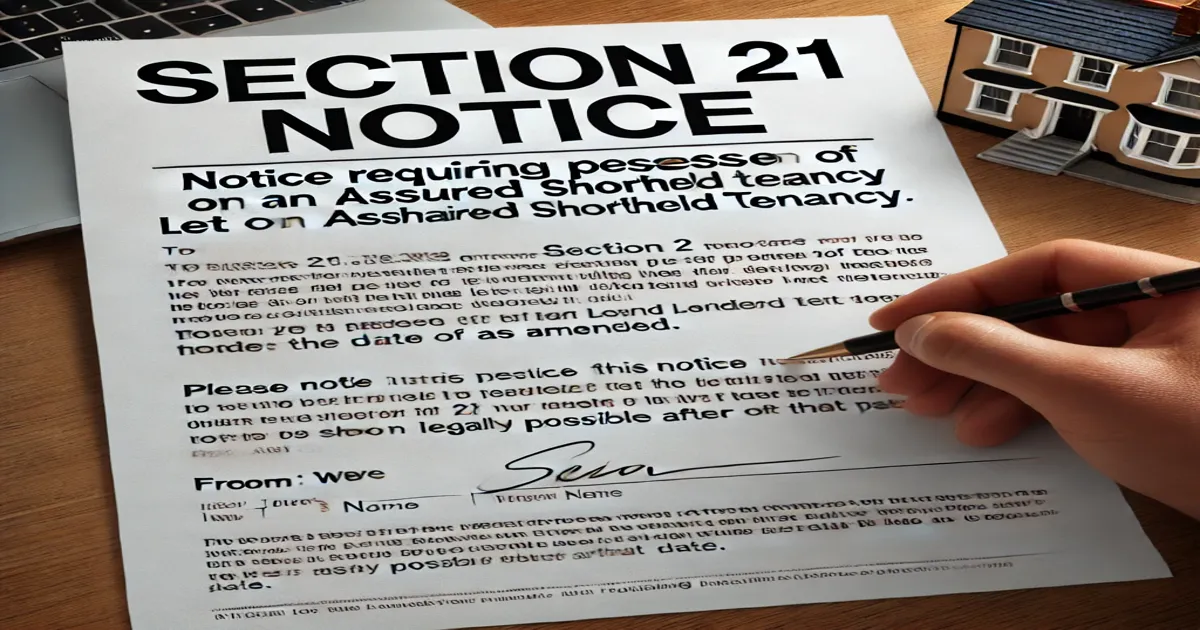
Renters’ Rights Bill 2026: Abolition of Section 21 and the Shift to Periodic Tenancies
The Renters’ Rights Bill 2026 represents one of the most significant reforms to landlord and tenant law in England for decades.
Its centrepiece is the abolition of Section 21 “no-fault” evictions and a nationwide shift to periodic tenancies, marking a decisive break from the existing structure of fixed-term assured shorthold tenancies (ASTs).
For landlords, this means a fundamental change in how properties are let, managed, and recovered when tenants breach agreements or when landlords need their property back.
This article explains the key changes, the rationale behind them, and most importantly, what landlords must do now to prepare.
The End of Section 21 “No-Fault” Evictions
For years, Section 21 of the Housing Act 1988 has allowed landlords to regain possession of a property at the end of a fixed term, provided proper notice was served.
It became the go-to mechanism for landlords wanting certainty and speed in repossession, particularly when rent arrears or disputes made the relationship unworkable.
The Renters’ Rights Bill 2026 will abolish Section 21 in its entirety. Once it comes into force, landlords will only be able to end tenancies using specific legal grounds, most of which will fall under Section 8 eviction routes.
These grounds will be expanded and clarified to cover genuine landlord needs, such as selling, moving in themselves or for family, or serious tenant breaches, including rent arrears and antisocial behaviour.
For landlords, this means eviction will become more reliant on proving grounds before a court or tribunal, rather than relying on automatic notice rights.
The Shift to Periodic Tenancies
The Bill introduces a default system of rolling periodic tenancies. Fixed-term tenancies will be phased out. Every new tenancy, and every existing tenancy once transitioned, will automatically be periodic from the start.
A periodic tenancy runs indefinitely, with rent usually paid monthly, and can only be ended by the tenant giving notice or the landlord establishing one of the prescribed grounds for possession.
This reform is intended to provide tenants with greater security while allowing landlords to recover properties in cases where there is a legitimate reason.
However, landlords must prepare for the reality that properties can no longer be guaranteed vacant simply by waiting for a fixed term to expire.
Strengthening of Section 8 Grounds
Recognising that landlords need confidence in their ability to regain possession, the Bill strengthens and streamlines Section 8 grounds for eviction. Key changes expected include:
- Mandatory grounds for serious rent arrears: Landlords will still have a clear route to repossession where tenants persistently fail to pay rent.
- Grounds for sale or occupation: Landlords will be able to recover possession if they genuinely intend to sell the property or move in themselves or with close family.
- Grounds for antisocial behaviour: These will be broadened to allow quicker responses where tenants cause nuisance or harassment.
Courts and tribunals will also be under statutory duties to handle cases more quickly to reduce landlord losses.
What This Means for Landlords
The new framework will affect landlords in multiple ways:
- Longer tenant security: Landlords must assume that tenants will stay until they choose to leave or until valid grounds for eviction exist.
- Reduced certainty of vacant possession: The ability to regain property at a known date will disappear. This impacts landlords who plan sales or refinancing around tenancy cycles.
- Increased need for robust record-keeping: To rely on Section 8 grounds, landlords must evidence arrears, breaches, or plans for sale/occupation.
- More active property management: Issues such as arrears or antisocial behaviour will need early documentation and prompt action to avoid delays.
Practical Steps Landlords Must Take Now
With the Bill set to become law in 2026, landlords should act now to prepare:
Review Tenancy Agreements
Standard AST templates will become obsolete. Agreements must reflect the new periodic structure, removing references to fixed terms and ensuring compliance with evolving legislation.
Strengthen Rent Collection Procedures
Arrears management will be critical under Section 8. Landlords should adopt precise payment tracking, issue reminders promptly, and keep complete written and digital records of communications.
Update Possession Strategies
Landlords who previously relied on Section 21 should familiarise themselves with Section 8 grounds and adjust their strategies accordingly. For example, consider whether the sale or occupation grounds may be needed in future.
Enhance Tenant Vetting
Without Section 21 as a safety net, tenant selection becomes more critical. Robust referencing and credit checks reduce the risk of arrears or antisocial behaviour.
Keep Evidence for Grounds Ready
If relying on the intention to sell or move in, landlords should retain supporting documents (e.g., estate agent agreements, personal statements, family plans) to substantiate their claims. Courts will expect credible evidence.
Monitor Local Authority Enforcement
The Bill also strengthens enforcement against non-compliant landlords, including the imposition of fines and bans. Staying compliant with registration, licensing, and property standards is more vital than ever.
Broader Implications for the Rental Market
The reforms aim to rebalance rights between landlords and tenants. Tenants gain security and stability, while landlords lose the certainty of fixed-term end dates. This could have several consequences:
- Some landlords may exit the sector, particularly smaller investors who prefer predictable turnover.
- Professional landlords with long-term investment models may adapt more easily.
- The rental supply could tighten if more landlords sell, potentially leading to higher rents.
Policymakers hope the strengthened Section 8 grounds and faster courts will reassure landlords, but much depends on implementation.
Preparing for the Future
The Renters’ Rights Bill 2026 will reshape landlord-tenant relationships in England. Landlords who adapt early by updating agreements, tightening management, and embracing compliance will protect their investments and avoid costly disputes.
Those who fail to prepare may find themselves unable to regain possession when needed or facing enforcement action.
The abolition of Section 21 and the move to periodic tenancies is a significant shift, but with careful planning, landlords can continue to operate successfully under the new regime.
FAQs
Will existing fixed-term tenancies be converted?
Yes. Once the Bill is enacted, existing ASTs will transition into periodic tenancies.
Can landlords still sell their properties with tenants still living inside?
Yes, but they must rely on the new possession grounds for sale or negotiate with tenants.
Will rent arrears cases be easier or harder?
They should be more straightforward if arrears are serious and well-documented, but the process will still require court or tribunal action.
Does this mean tenants can never be evicted?
No. Tenants can still be evicted for valid reasons, but landlords must prove grounds rather than rely on no-fault notices.
Should landlords leave the market before 2026?
That depends on strategy. Professional landlords may adapt, while those reliant on short cycles may find the new rules less attractive.
Our top-read blogs:
Is Commercial Property a Good Investment in England & Wales?
Commercial Property Rent Review Protocol
Investing in Commercial Property vs Residential Property: The Advantages and Disadvantages
The British Landlords Association is a national landlord association, one of the largest in the UK. The BLA is the only landlords’ association in the UK that represents and supports both commercial and residential landlords. Join us now for £89.95!