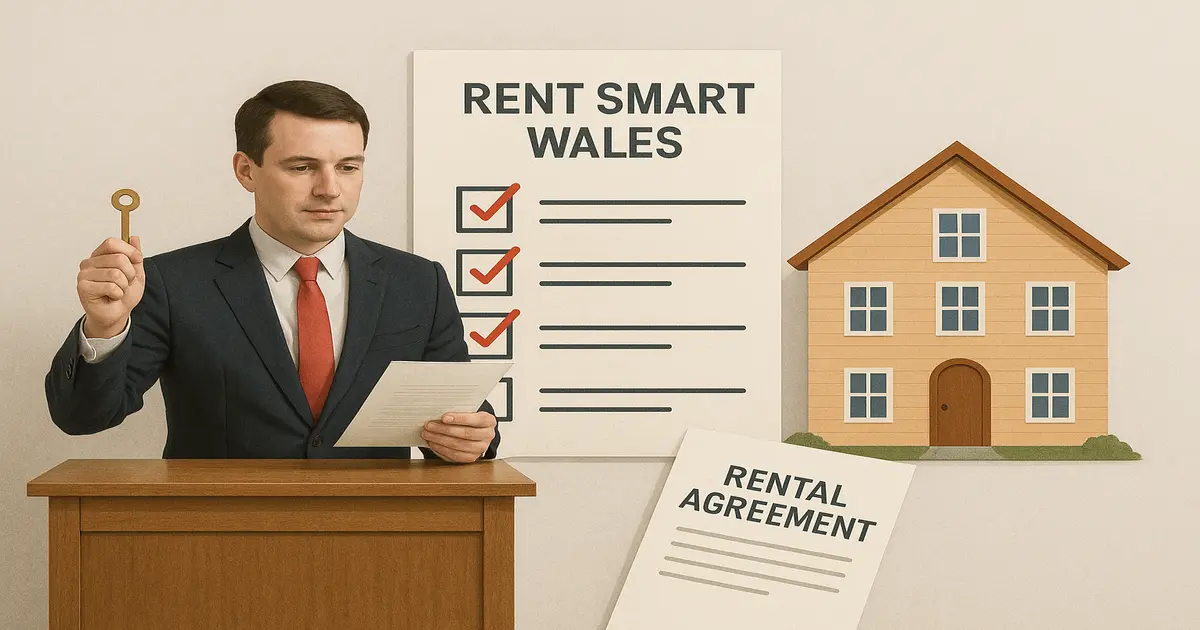
First-Time Landlords in Wales: Registration, Screening, and Legal Basics (With Rent Smart Wales Checklist)
Becoming a landlord for the first time in Wales is an exciting prospect, but it also comes with significant legal responsibilities.
Unlike some parts of the UK, Wales has a unified regulatory framework, established under the Renting Homes (Wales) Act 2016, and the Rent Smart Wales scheme.
First-time landlords must learn how to register correctly, screen tenants legally, and comply with safety and housing laws. Without this knowledge, new landlords risk penalties and disputes.
This guide explains the essentials every beginner needs to know and includes a Rent Smart Wales checklist to ensure compliance.
Understanding Rent Smart Wales
Rent Smart Wales is the national registration and licensing authority for landlords and letting agents in Wales. It is compulsory for all landlords who rent out property in Wales.
First-time landlords must register with Rent Smart Wales before advertising or letting a property. Registration confirms the identity of the landlord and their property ownership details.
If a landlord self-manages, they must also apply for a licence. This requires completing approved training to demonstrate knowledge of rental law, tenant rights, and housing management.
Those who use letting agents still need to register, but can rely on the agent’s licence to handle management.
Non-compliance can result in fines of up to £30,000 and may even lead to criminal prosecution.
First Steps for New Landlords
New landlords in Wales must approach their role as both a business and a legal responsibility. Key first steps include:
- Registering with Rent Smart Wales.
- Deciding whether to self-manage or appoint an agent.
- Obtaining landlord insurance to protect against risks such as rent arrears or property damage.
- Preparing tenancy agreements that comply with Welsh housing law.
Screening Tenants Professionally
Tenant screening is one of the most essential duties for new landlords. Accepting the wrong tenant can lead to arrears, property damage, and costly evictions.
First-time landlords should adopt a professional screening process:
- Request proof of identity and right to rent in the UK.
- Carry out credit checks and affordability assessments.
- Obtain references from previous landlords and employers.
- Meet tenants in person before signing an agreement.
A straightforward screening process protects both landlord and tenant. It ensures the tenant can afford the rent and reduces the risk of disputes in the future.
Tenancy Agreements in Wales
Since December 2022, all landlords in Wales have used a standardised agreement under the Renting Homes (Wales) Act 2016. This agreement is called the “occupation contract.”
There are two main types:
- Standard Occupation Contract – used mainly in the private rental sector.
- Secure Occupation Contract – primarily used by community landlords such as councils or housing associations.
For first-time landlords, the standard occupation contract applies. The agreement is legally binding and must include prescribed information such as rent amount, notice periods, and repair obligations.
Legal Basics Every Landlord Must Know
Welsh landlords are required to comply with a wide range of laws and regulations. Key areas include:
- Deposit Protection – All deposits must be secured in a government-approved scheme.
- Repairs and Maintenance – Landlords are responsible for the structure, exterior, heating, hot water, and central installations.
- Fitness for Human Habitation – Properties must be safe, free from serious hazards, and include smoke alarms, carbon monoxide detectors, and valid EICR certification.
- Rent Increases – Must follow the rules set out in occupation contracts and Welsh legislation.
Failure to comply can lead to tenant claims, tribunal action, or financial penalties.
Safety and Compliance
First-time landlords often underestimate the importance of safety compliance. Welsh law is strict on this point. Landlords must ensure:
- Working smoke alarms on every floor.
- Carbon monoxide detectors in rooms with solid fuel appliances.
- An up-to-date electrical installation condition report (EICR).
- Gas safety checks are carried out annually by a registered engineer.
- An Energy Performance Certificate (EPC) is available for the property.
These are not optional; they are mandatory legal obligations.
Rent Collection and Record Keeping
Another essential skill for landlords is managing rent. First-time landlords should establish clear payment methods, ideally via a standing order or direct debit. Written receipts must be provided if tenants pay in cash.
Accurate record keeping is equally important.
Landlords should maintain copies of contracts, deposit details, inspection reports, maintenance records, and all communication with tenants. Good records help resolve disputes quickly and protect the landlord in legal proceedings.
Rent Smart Wales Checklist for First-Time Landlords
To simplify compliance, here is a checklist for first-time landlords in Wales:
- Register with Rent Smart Wales.
- Apply for a landlord licence if managing the property yourself.
- Complete mandatory landlord training.
- Provide a written occupation contract.
- Protect tenant deposits in an approved scheme.
- Supply an EPC before advertising.
- Install smoke alarms and carbon monoxide detectors.
- Carry out annual gas safety checks.
- Obtain an electrical installation condition report (EICR).
- Keep accurate records of inspections, repairs, and communications.
- Ensure property meets fitness for habitation standards.
Completing this checklist reduces risks and builds credibility as a professional landlord.
Avoiding Common Mistakes
First-time landlords in Wales often make predictable mistakes. These include:
- Failing to register with Rent Smart Wales on time.
- Using old tenancy agreements instead of the new occupation contract.
- Neglecting deposit protection.
- Ignoring repair requests until they escalate into significant issues.
- Renting without an EPC or valid safety certificates.
Avoiding these errors will save time, money, and stress.
Benefits of Compliance
While the rules may seem overwhelming, compliance brings benefits. A compliant landlord avoids fines, tribunal cases, and reputational damage. Tenants are more likely to stay longer in well-managed, safe homes.
Compliance also makes properties more attractive to quality tenants. Renters increasingly prioritise professionalism, safety, and transparency when choosing homes.
Building a Professional Landlord Mindset
First-time landlords should view property letting as a business. That means planning for expenses, saving for repairs, and treating tenants with respect and dignity. A professional approach builds trust and long-term profitability.
It also helps first-time landlords scale up their portfolios if they decide to expand their operations. Lenders and insurers prefer landlords who can demonstrate compliance and competence.
FAQs
Do all landlords in Wales need to register with Rent Smart Wales?
Yes, registration is compulsory for every landlord in Wales.
Can I let property in Wales without training?
No, if you self-manage, you must complete approved landlord training to obtain a licence.
How do I protect a tenant’s deposit?
You must secure it in one of the three government-backed tenancy deposit schemes.
Do I need an EPC before renting a property?
Yes, an Energy Performance Certificate (EPC) must be provided to prospective tenants before marketing the property.
What happens if I don’t comply with Rent Smart Wales?
You risk fines of up to £30,000, fixed penalties, or even prosecution.
What is an occupation contract?
It is the new legal tenancy agreement required under the Renting Homes (Wales) Act 2016.
Conclusion
Becoming a first-time landlord in Wales is rewarding but comes with strict responsibilities. Registration with Rent Smart Wales, thorough tenant screening, and adherence to legal compliance form the foundation of successful property letting.
By following the Rent Smart Wales checklist, landlords can avoid penalties, attract reliable tenants, and build a long-term, profitable rental business.
Our top-read blogs:
Is Commercial Property a Good Investment in England & Wales?
Commercial Property Rent Review Protocol
Investing in Commercial Property vs Residential Property: The Advantages and Disadvantages
The British Landlords Association is a national landlord association, one of the largest in the UK. The BLA is the only landlords’ association in the UK that represents and supports both commercial and residential landlords. Join us now for £89.95!