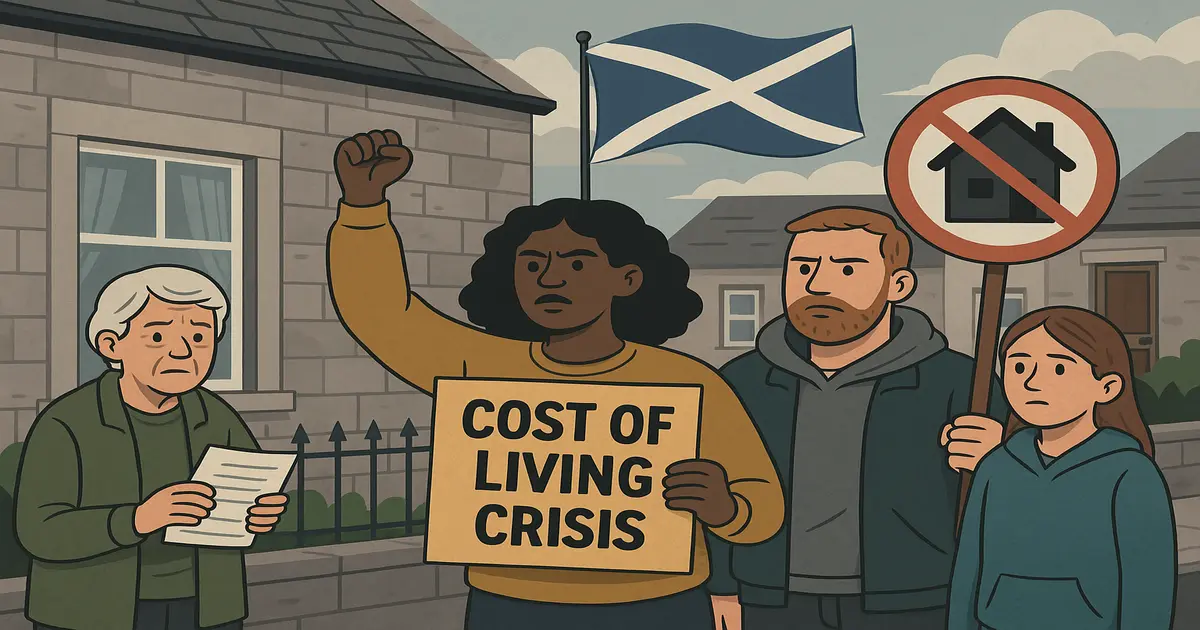
Cost of Living (Tenant Protection) (Scotland) Act 2022 – Temporary Rent Cap and Eviction Moratorium
The Cost of Living (Tenant Protection) (Scotland) Act 2022 was a landmark piece of emergency legislation introduced by the Scottish Government in response to the financial pressures created by rising inflation, energy costs, and the wider cost-of-living crisis.
It introduced two significant measures: a temporary rent cap and an eviction moratorium, which applied across the private and social rented sectors, as well as student accommodation.
These protections first came into force on September 6 2022, remained in place until March 31 2024, and were supported by transitional arrangements that later phased out.
This article examines the background to the Act, its provisions, implementation, impact on both tenants and landlords, and the eventual expiration of these emergency protections.
Why the Cost of Living Act Was Introduced
Unprecedented challenges marked the period leading into late 2022 for households in Scotland. The inflation rate had reached levels not seen in decades, driven particularly by escalating energy prices.
Many tenants were struggling to meet rising rental costs while simultaneously facing increases in food, fuel, and utility bills.
The Scottish Government sought to act quickly to provide security and predictability for tenants during this turbulent time.
Ministers argued that without intervention, thousands of households risked losing their homes due to unaffordable rent increases or eviction at a time of economic hardship.
The Cost of Living (Tenant Protection) (Scotland) Act 2022 was introduced as emergency legislation to:
- Prevent sharp rent increases during the crisis.
- Provide tenants with stability and reassurance during uncertain times.
- Reduce the risk of homelessness by pausing most evictions.
- Provide breathing space for households until inflation began to stabilise.
Key Provisions of the Act
The Act contained two headline measures – the rent cap and eviction moratorium – supported by enforcement provisions and exceptions to balance tenant protection with landlords’ property rights.
The Temporary Rent Cap
- From September 6 2022, in most cases, landlords were prohibited from increasing rents by more than 0%, effectively freezing rent levels.
- This applied to the private rented sector, the social rented sector, and student accommodation.
- In April 2023, the cap was adjusted, allowing for increases of up to 3%, with some instances permitting rises to 6% where landlords could demonstrate increased property costs, such as higher mortgage interest rates.
- Rent adjudication processes were also adapted to allow tenants to refer proposed increases for independent assessment under the cap.
The Eviction Moratorium
- Landlords were generally barred from enforcing evictions during the protected period, even if legal notices had already been served.
- Exceptions apply in limited situations, such as when tenants engage in antisocial or criminal behaviour, or when landlords need to move back into the property due to genuine hardship.
- This moratorium was intended to prevent homelessness and reduce pressure on local authority housing support systems.
Timeline of the Measures
- September 6 2022 – Emergency protections took effect.
- October 2022 – The Scottish Parliament formally passed the legislation.
- April 2023 – Rent cap adjusted from 0% to 3% (with scope for 6% in exceptional cases).
- September 2023 – The Government reviewed and extended the measures further, citing continued cost-of-living pressures.
- March 31 2024 – Protections under the Act expired.
- Post-March 2024 – Transitional arrangements phased out the remaining protections and restored the standard legal framework for rents and evictions in Scotland.
Impact on Tenants
For tenants, the Act offered immediate relief during a period of financial instability.
- Rent stability – Thousands of tenants avoided sudden or sharp rent increases. This provided predictability, allowing households to plan their finances with greater certainty.
- Housing security – The eviction moratorium provided reassurance to tenants who might otherwise have been at risk of losing their homes due to unpaid arrears.
- Psychological benefit – The measures reduced stress and anxiety at a time when many families already faced rising bills.
Tenant advocacy groups widely welcomed the Act, describing it as a vital intervention that prevented homelessness and gave renters breathing space.
Impact on Landlords
The legislation was not without controversy. Landlord associations and property industry groups raised concerns about the financial and operational impact.
- Rental income pressure – Landlords argued that the freeze and cap restricted their ability to keep pace with rising mortgage rates, insurance premiums, and maintenance costs.
- Market confidence – Some claimed the policy undermined investment confidence in Scotland’s rental market, discouraging new landlords and reducing supply.
- Balance of rights – Critics questioned whether the measures adequately balanced the rights of tenants with those of property owners, particularly smaller landlords reliant on rental income.
While exceptions and transitional measures sought to mitigate these issues, the overall view from landlord groups was that the Act placed disproportionate burdens on property owners.
Transitional Arrangements After March 2024
The Scottish Government confirmed that the Act would expire on March 31 2024, with transitional arrangements in place thereafter.
- Any rent increase notices served during the emergency period remained subject to the caps until their end date.
- Eviction cases that had been paused under the moratorium resumed under the standard eviction rules once the protections lapsed.
- By mid-2024, the rental market had returned to the pre-Act legislative framework, as outlined in the Private Housing (Tenancies) (Scotland) Act 2016 and related housing laws.
This staged approach ensured a smoother transition and avoided an abrupt shift for both tenants and landlords.
Wider Policy Context
The Act formed part of the Scottish Government’s wider housing and cost-of-living response. Alongside this emergency legislation, ministers committed to:
- Increasing investment in affordable housing.
- Expanding tenant support funds for those in arrears.
- Exploring long-term rent control measures, with plans to introduce a system of “rent control areas” under future legislation.
The experience of the temporary rent cap and eviction moratorium is expected to shape future debates around housing affordability and tenant protections in Scotland.
Criticism and Legal Challenges
The Act also faced legal challenges from landlord bodies, including the Scottish Association of Landlords. They argued that the measures interfered with landlords’ property rights under the European Convention on Human Rights.
Although these challenges did not overturn the legislation, they highlighted the ongoing tension between emergency social protections and property law rights.
Lessons Learned from the Act
The temporary measures offer several important lessons for housing policy:
- Emergency protections can provide vital short-term relief during crises, but they must be carefully balanced to avoid long-term market distortion.
- Tenant security remains a central political issue, with increasing calls for permanent rent controls.
- Landlord confidence is equally vital to ensure continued investment in Scotland’s private rented sector, particularly as housing demand continues to outpace supply.
FAQs
What was the Cost of Living (Tenant Protection) (Scotland) Act 2022?
It was emergency legislation introduced by the Scottish Government that froze rents and paused most evictions between September 2022 and March 2024.
When did the rent cap and eviction moratorium apply?
They ran from September 6, 2022, until March 31, 2024, with transitional arrangements continuing briefly afterwards.
How much could landlords increase rent during the period?
Initially, rents were frozen at 0%. From April 2023, landlords could raise rents by up to 3% or, in some cases, up to 6% if justified.
Were any evictions allowed during the moratorium?
Yes, but only in limited circumstances, such as cases involving antisocial behaviour or landlord hardship.
What happened after March 2024?
The Act expired, and customary tenancy law resumed under the Private Housing (Tenancies) (Scotland) Act 2016 and related statutes.
Conclusion
The Cost of Living (Tenant Protection) (Scotland) Act 2022 was a remarkable response to an unprecedented crisis.
By freezing rents and pausing evictions between September 6, 2022, and March 31, 2024, it provided crucial stability for tenants during a period of extreme financial pressure.
While widely welcomed by tenant groups, the legislation also generated concern among landlords about income viability and long-term investment. Its expiry in March 2024, followed by transitional arrangements, marked a return to the standard Scottish tenancy framework.
The legacy of the Act lies in the ongoing debate it has sparked: how to strike the right balance between tenant protection and landlord sustainability in Scotland’s rental housing market.
With housing affordability remaining a pressing concern, the lessons from this temporary intervention will likely influence Scottish housing policy for years to come.
Our top-read blogs:
Is Commercial Property a Good Investment in England & Wales?
Commercial Property Rent Review Protocol
Investing in Commercial Property vs Residential Property: The Advantages and Disadvantages
The British Landlords Association is a national landlord association, one of the largest in the UK. The BLA is the only landlords’ association in the UK that represents and supports both commercial and residential landlords. Join us now for £89.95!